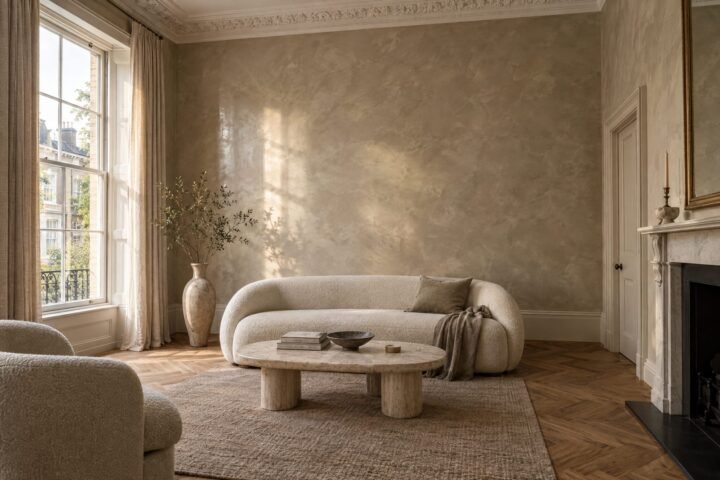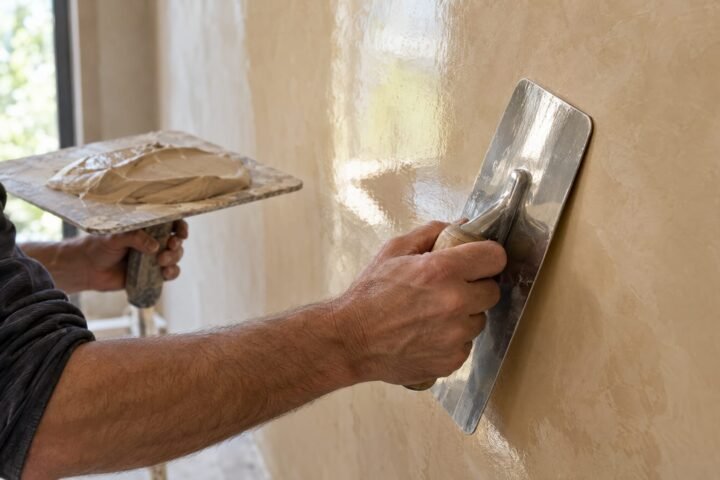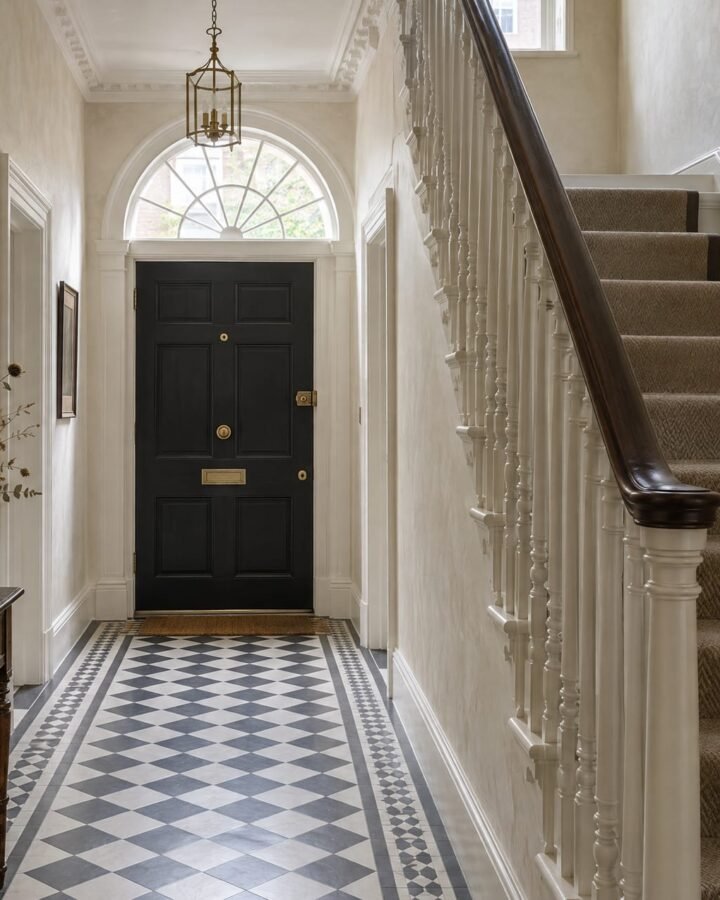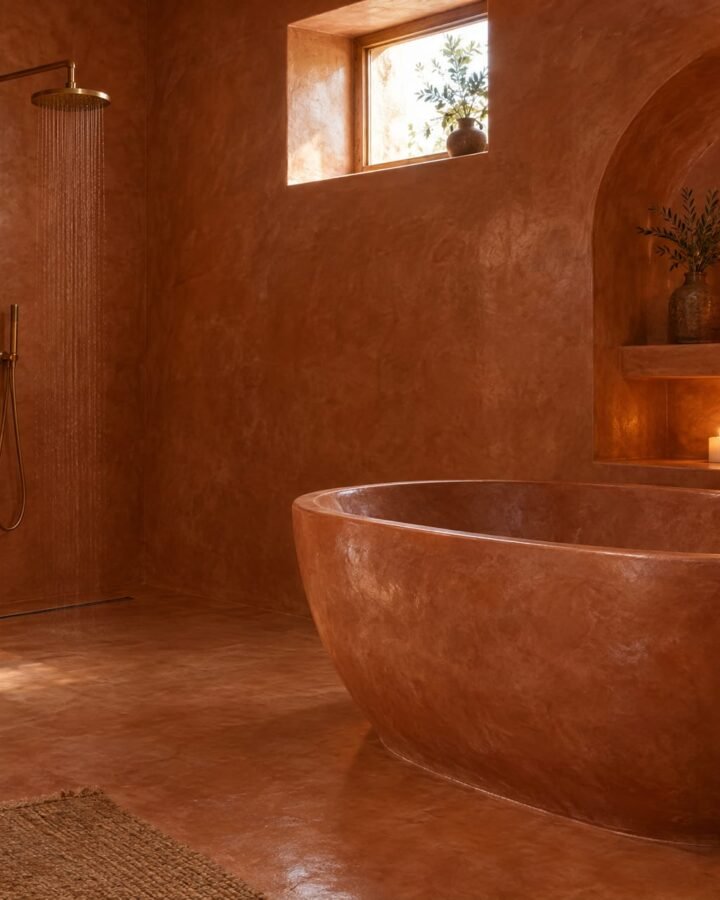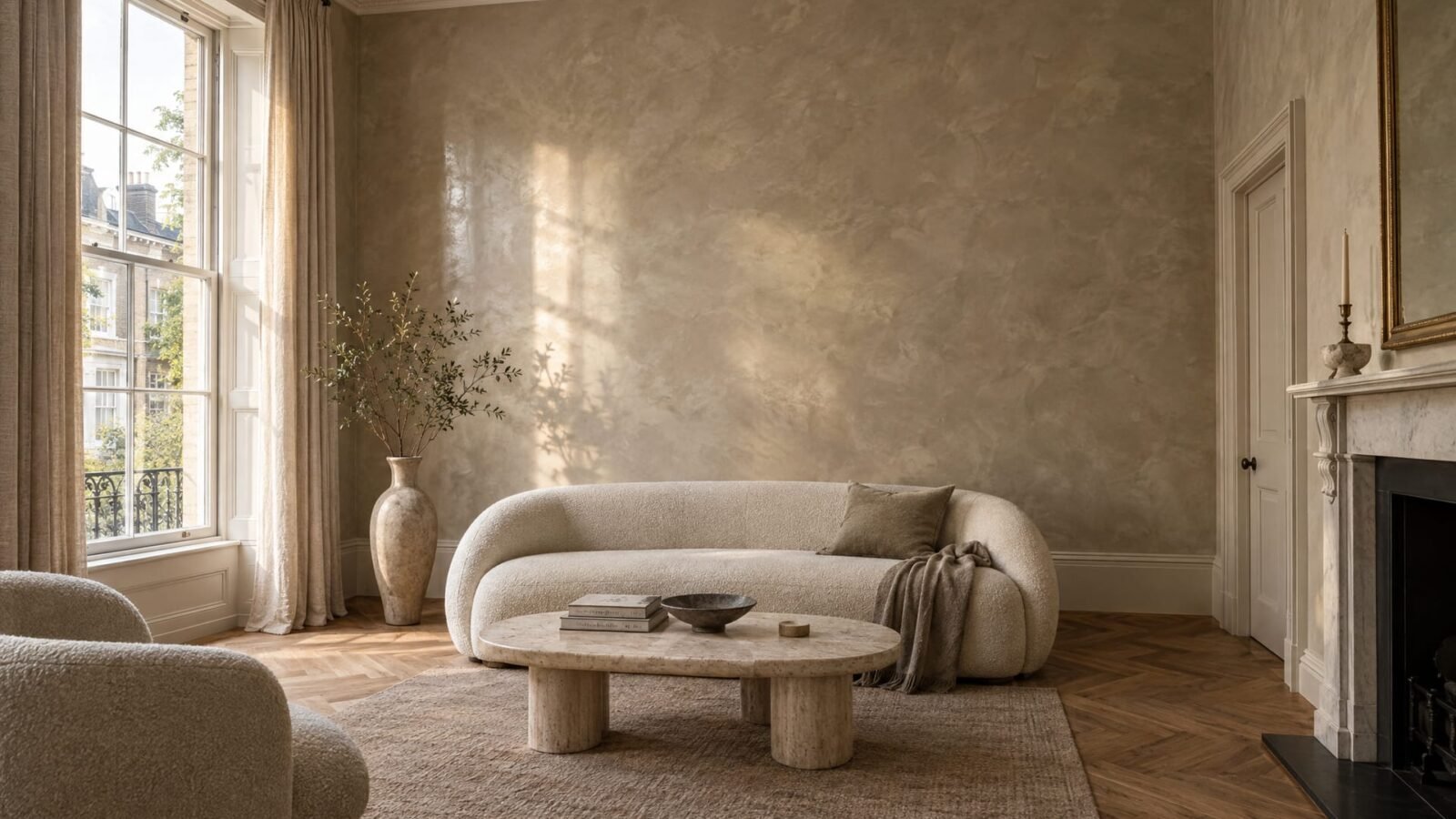
Venetian plaster is one of the oldest decorative finishes in the world — and still one of the most beautiful. Made from aged lime putty and finely ground marble, it is applied by hand in wafer-thin layers and burnished with steel trowels until the surface takes on a cool, stone-like depth that paint can’t imitate.
We apply genuine Venetian plaster across London, from single feature walls behind a bed or sofa to entire hallways, dining rooms, staircases and ceilings. Every finish is mixed and tinted for your project, applied by our own team and finished to the sheen you choose — from a soft satin glow to a mirror-like polish.
What makes Venetian plaster different
Paint is a film that sits on top of a wall. Lime plaster becomes part of it. As it cures, the lime slowly absorbs carbon dioxide from the air and turns back into calcium carbonate — essentially limestone. That is why a well-applied Venetian finish gets harder with age, why it can last for decades, and why the colour seems to come from within the wall rather than sitting on the surface.
- Depth and movement — overlapping trowel strokes create cloudy, marble-like variation that shifts as the light moves.
- Breathability — lime lets moisture vapour pass through, which is especially valuable in Victorian, Edwardian and Georgian London homes with solid walls.
- Naturally mould-resistant — lime is highly alkaline, which discourages mould growth.
- Seamless — no joints, edges or panels, even across large walls and curves.
- Repairable — small knocks can usually be filled and re-burnished rather than redecorating a whole wall.
If you’re new to polished plaster, our guide What is Venetian plaster? explains the history, materials and finishes in plain English.
Venetian plaster finishes we apply
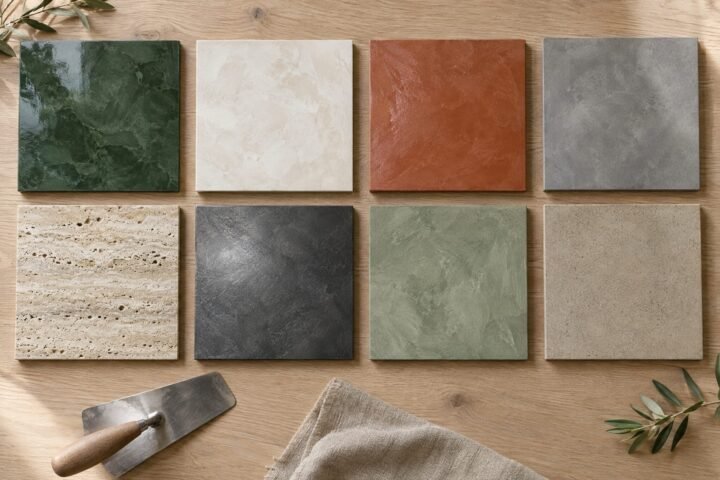
“Venetian plaster” is really a family of finishes. The main ones we apply in London homes are:
- Stucco Veneziano (high gloss) — the classic polished finish. Fine lime and marble built up in three or four coats, burnished hard and waxed for a deep, reflective gloss. Spectacular on feature walls and in dining rooms.
- Satin polished plaster — the same depth with a softer, low-sheen glow. Our most popular choice for bedrooms and living rooms.
- Marmorino — a slightly coarser marble plaster with a matt-to-satin, stone-like finish. Superb in hallways and period properties.
- Metallic and pearlescent glazes — subtle shimmer over a polished base, ideal for evening spaces. See our textured and metallic finishes.
Unsure which you prefer? We explain the differences in Marmorino vs stucco veneziano, and you can browse every option on our finishes & samples page.
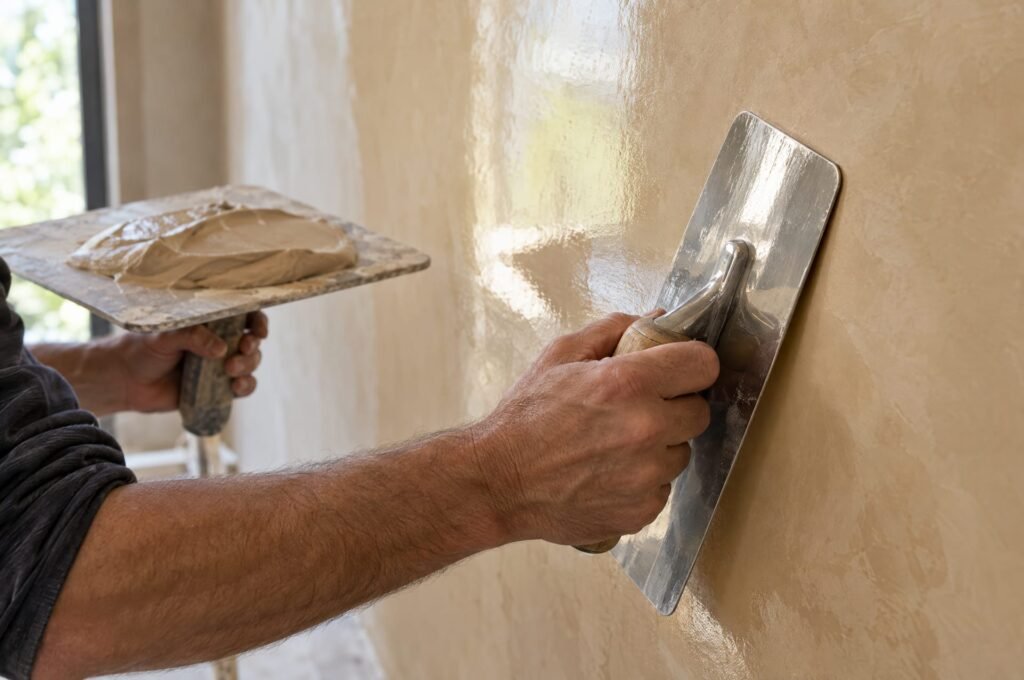
How we apply Venetian plaster
- Survey and samples. We visit, check the walls for moisture, cracks and flatness, and bring sample boards so you can choose colour and sheen in your own light.
- Protection and preparation. Floors, joinery and furniture are covered. Cracks are cut out and filled, uneven areas skimmed if needed, and the surface is primed with a grip coat.
- Base coats. The first coats are trowelled on thinly and left to dry, building up the colour and texture.
- Finishing coats and burnishing. Final coats are pressed hard with a steel trowel to compact the marble and lime, creating the polish.
- Wax or seal. A natural wax or breathable sealer protects the surface and deepens the colour. We tidy up and talk you through simple aftercare.
Good preparation is the difference between a finish that lasts decades and one that disappoints. Our guide on how long Venetian plaster lasts explains why.
Where Venetian plaster works best
Almost anywhere indoors. Our London clients most often choose it for:
- Feature walls behind beds, sofas and fireplaces
- Entrance halls, stairwells and landings
- Dining rooms and drawing rooms in period homes
- Curved walls, alcoves, niches and columns
- Ceilings and domes, where the sheen catches the light beautifully
- Powder rooms and bathroom walls away from direct water — read can you use Venetian plaster in bathrooms?
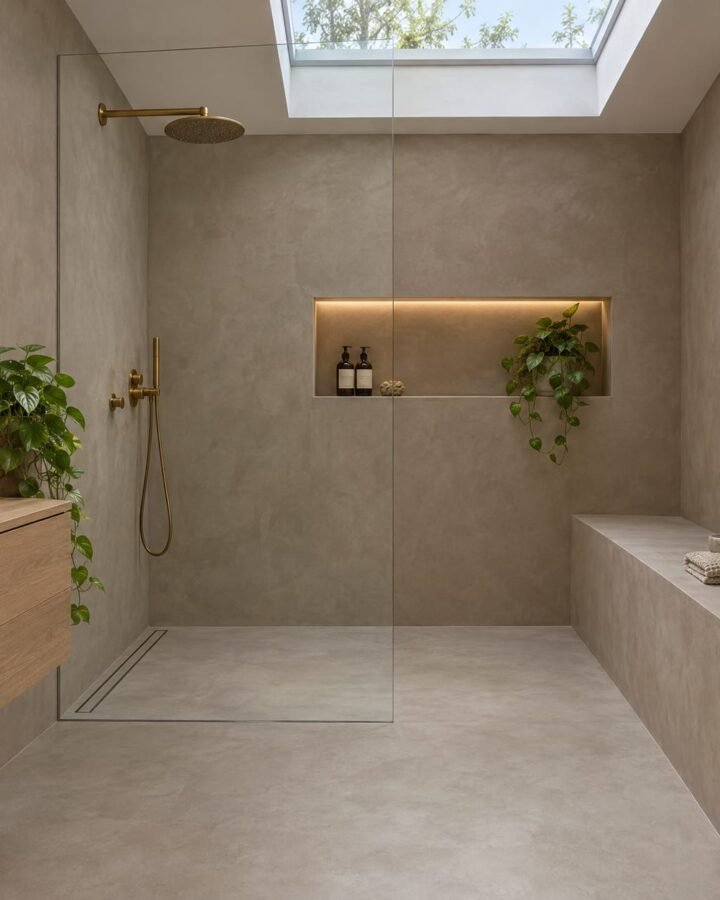
For showers and wet rooms we recommend tadelakt or microcement instead, and for restaurants, hotels and shops see our commercial polished plaster service.
Venetian plaster prices in London
Every wall is different, so we always quote after a free survey. As a guide, polished Venetian plaster in London typically costs between about £100 and £250 per m² supplied and applied, depending on the finish, the number of coats, the preparation required and access. There’s usually a minimum charge for small areas, because each coat needs its own visit and drying time.
For a full breakdown — including feature-wall and whole-room examples — read our Venetian plaster cost guide for London.
Venetian plastering across London and the Home Counties
We work in every London borough and travel regularly to towns including St Albans, Windsor, Guildford, Sevenoaks and Brentwood. Wherever you are, the process — and the standard — is the same.