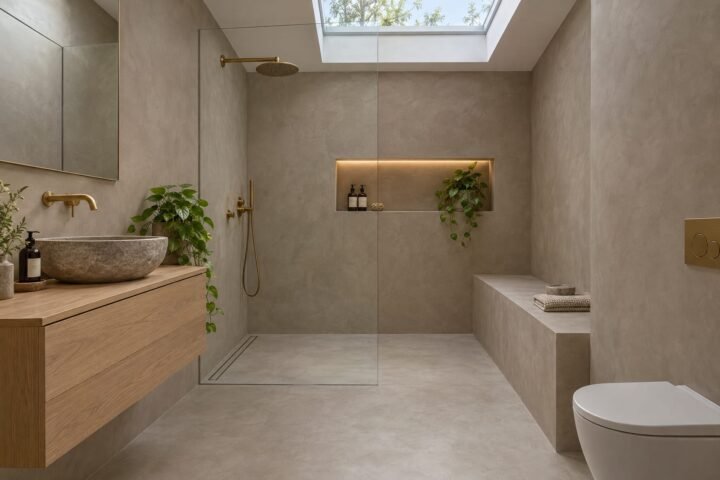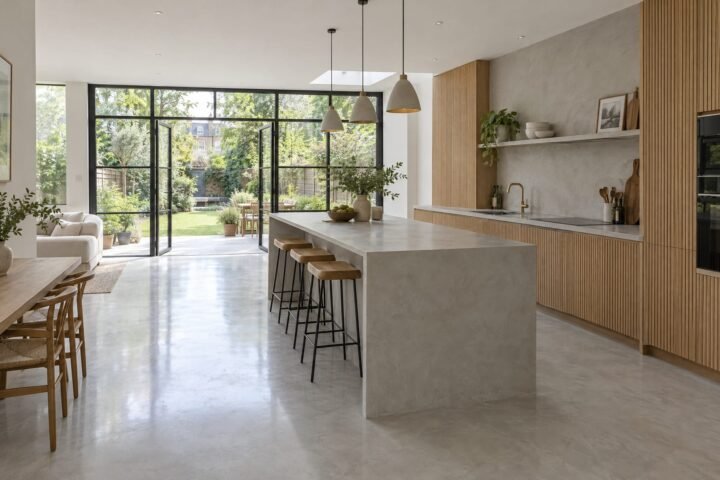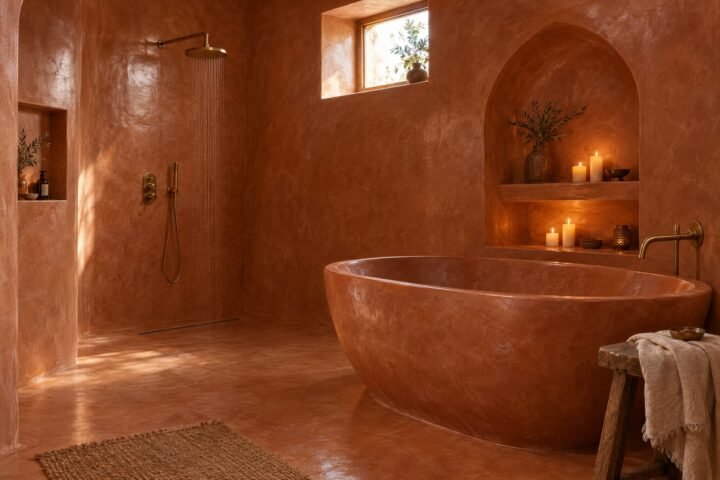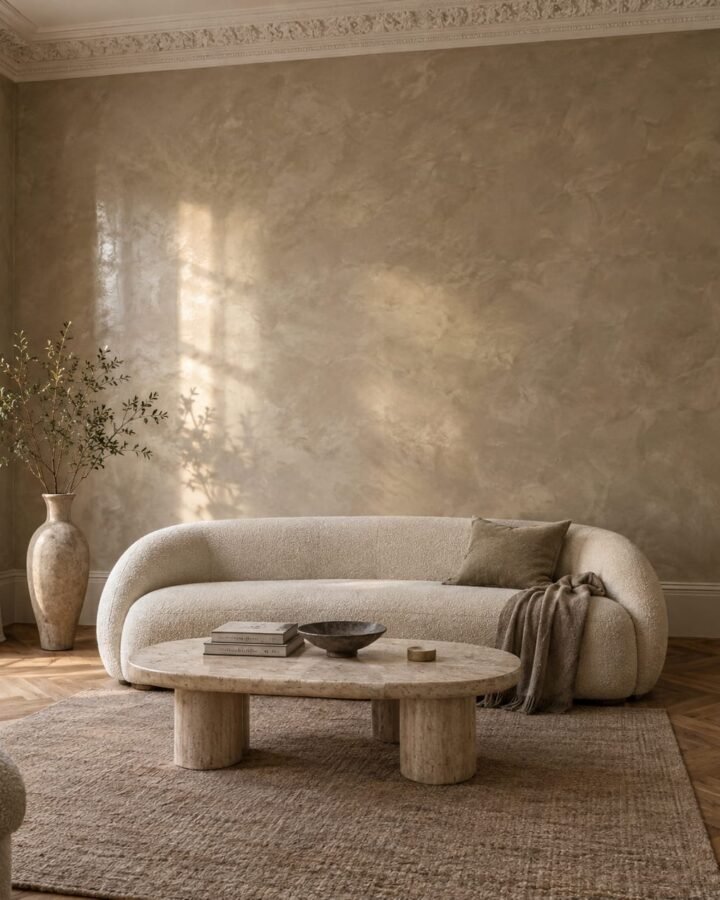
Microcement is a thin, polymer-modified cement coating that creates a single, seamless surface across floors, walls, showers, stairs and even worktops. No grout lines, no joints, no edges to collect dirt — just a calm, continuous finish that makes rooms feel larger and cleaner.
We install microcement in bathrooms, wet rooms, kitchens, open-plan extensions and commercial spaces across London. Because it is applied in layers only two to three millimetres thick, it can often go straight over existing surfaces — including sound tiles — with far less disruption than a traditional refit.
Where we use microcement
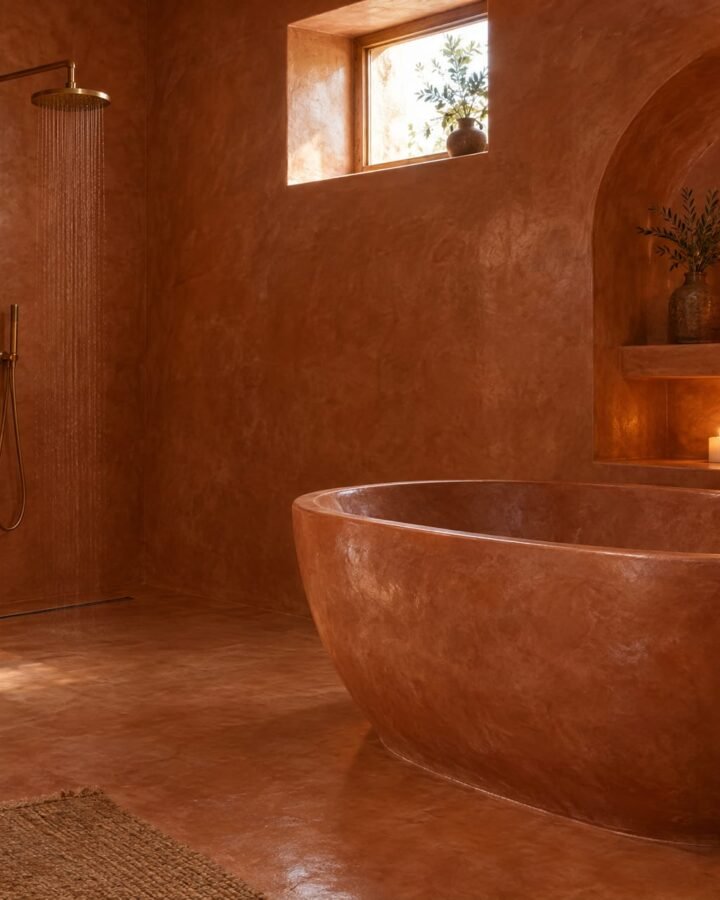
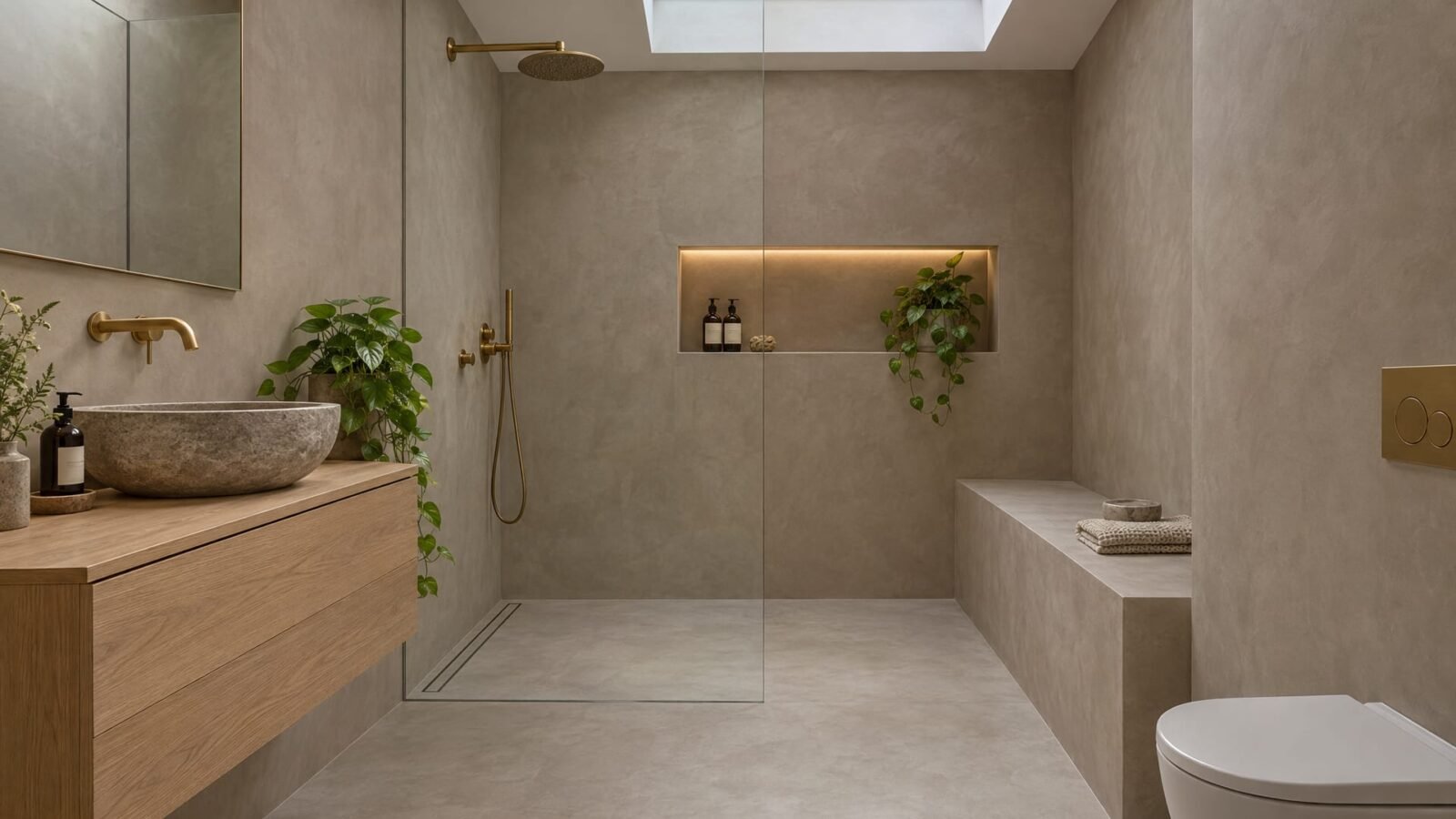
- Bathrooms and en-suites — walls, floors, vanity units and built-in benches in one continuous finish.
- Wet rooms and walk-in showers — over a fully tanked substrate, with anti-slip sealers on the floor.
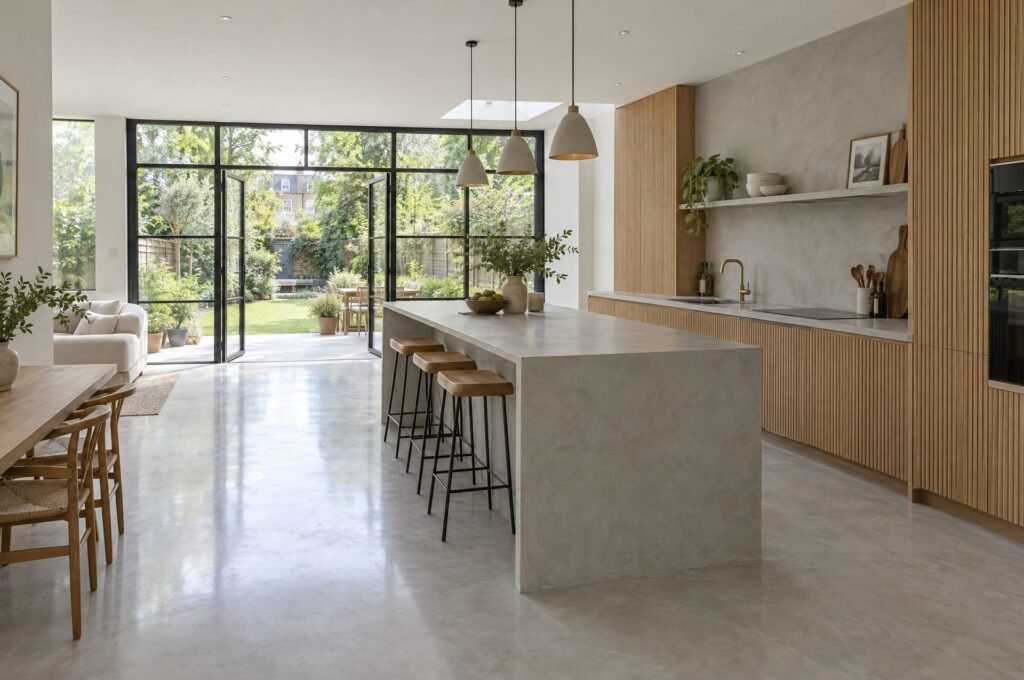
- Kitchen floors and extensions — flowing seamlessly from kitchen to dining to garden doors.
- Kitchen islands, splashbacks and worktops — sealed for food areas and everyday use.
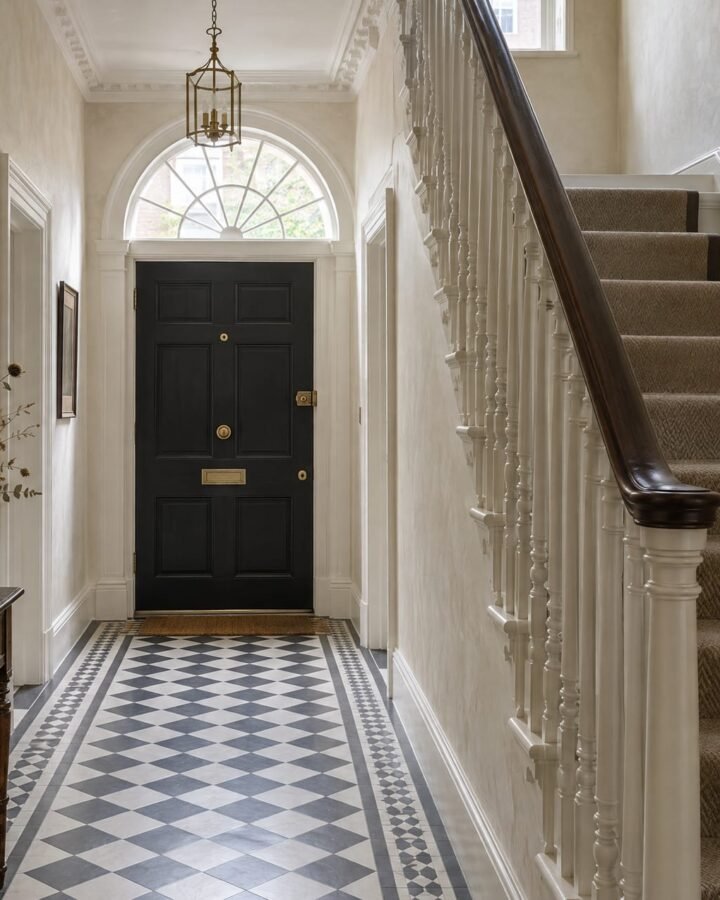
- Stairs and hallways — treads, risers and landings wrapped without visible joints.
- Restaurants, retail and offices — hard-wearing floors and counters; see our commercial service.
Why London homeowners choose microcement
Many London bathrooms are compact and many kitchens open onto a rear extension. Microcement suits both. With no grout lines breaking up the surface, a small bathroom looks larger and calmer, and an open-plan space reads as one continuous room.
- Seamless and hygienic — nothing for mould or limescale to cling to.
- Thin and fast — often no need to remove existing tiles or raise floor levels.
- Works with underfloor heating — the thin layer heats up quickly.
- Endless colours — from chalky whites and warm greys to deep charcoals and earthy taupes.
- Floors, walls and furniture — the same material can wrap every surface for a sculptural, minimalist look.
Comparing options? We weigh it up honestly in microcement vs tiles for bathrooms.
Our microcement process
- Survey. We check the substrate for movement, moisture and adhesion — the single most important step. Timber floors may need overboarding to make them rigid.
- Preparation. Existing tiles are checked tile by tile and grout lines filled; new boards are primed and reinforced with mesh at joints. In showers we install a tanking membrane.
- Base coats. Two coarser layers build strength and a flat, even surface.
- Finishing coats. Finer layers are trowelled to create the subtle cloudy texture microcement is loved for.
- Sealing. Several coats of water-based polyurethane sealer protect against water, stains and wear — with an anti-slip option for floors.
Thinking about a floor specifically? Our microcement floors guide covers durability, underfloor heating and what to expect day to day.
Microcement or tadelakt for a wet room?
Both make beautiful, seamless wet rooms. Microcement is crisper and more contemporary, works on floors as well as walls, and is easier to maintain long term. Tadelakt is a natural lime plaster with a softer, waxy, hand-polished feel — wonderful for walls, niches and sculpted baths. Our tadelakt guide explains the differences in more detail.
Microcement prices
As a guide, professionally installed microcement floors in the UK typically cost around £80–£160 per m², with walls, showers, stairs and small or complex areas at the upper end because of the extra detailing and preparation. A complete microcement bathroom (walls and floor) commonly lands somewhere between £3,500 and £7,000+ depending on size, tanking and prep. We provide a fixed quote after surveying the space. See our London pricing guide for how we price.
Microcement installers near you
We install microcement throughout London and across the Home Counties, including Watford, Reading, Weybridge, Chelmsford and Beaconsfield. Get in touch for a free survey and samples.