The verdict in brief
- Choose microcement for a seamless, grout-free look, easier cleaning, small bathrooms that need to feel bigger, and refits over existing tiles.
- Choose tiles if you want maximum scratch resistance, the widest range of patterns, or the lowest cost with standard ceramics.
- Both need proper waterproofing (tanking) underneath in showers and wet rooms.
Tiles have been the default bathroom finish in Britain for generations. Microcement is the newer, seamless alternative you’ve probably seen in boutique hotels and on Instagram. Both can look fantastic and both can last — but they suit different people, budgets and bathrooms.
Here’s an honest side-by-side comparison from a team that specialises in microcement but is happy to tell you when tiles are the better call.
What is microcement?
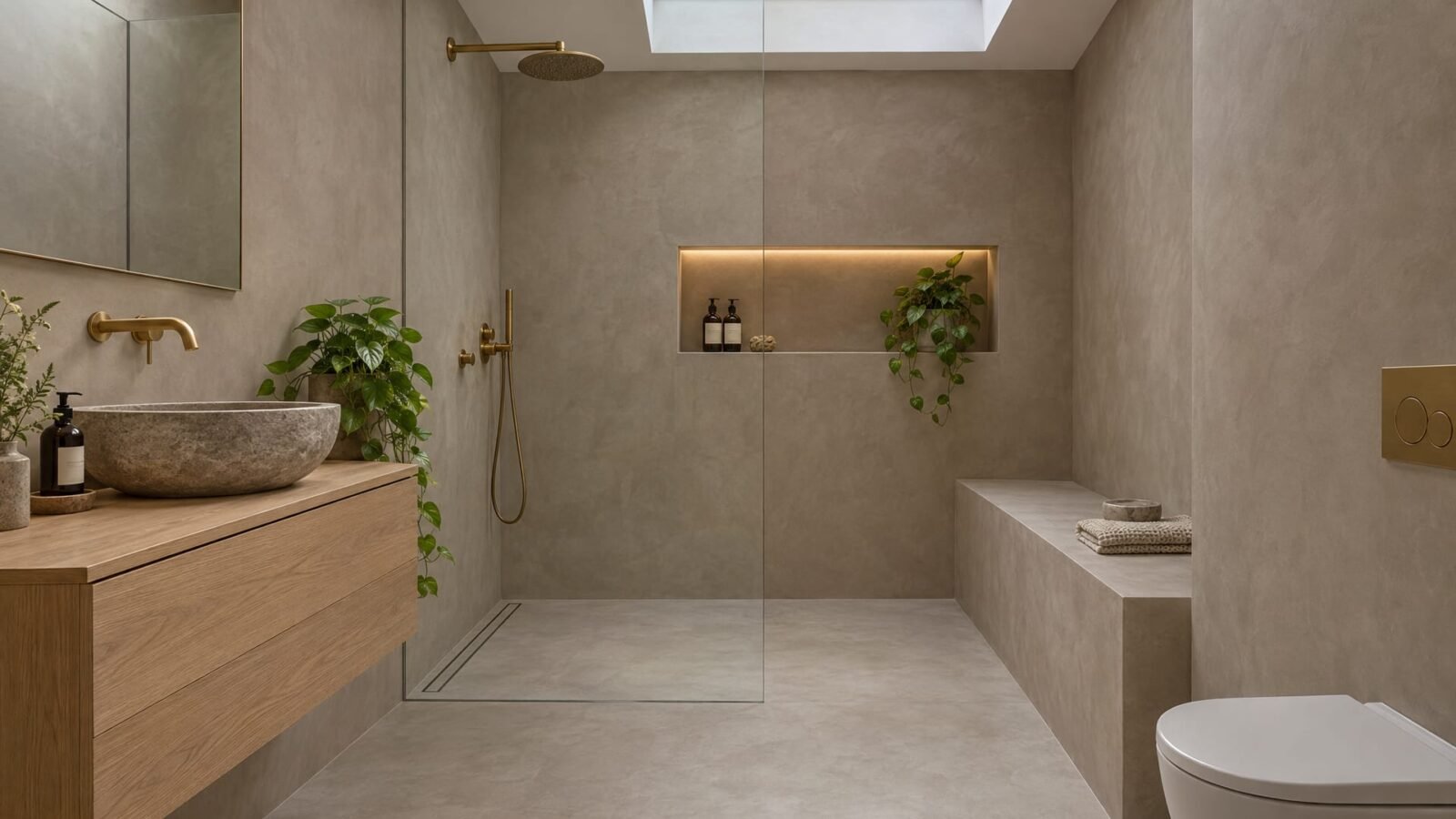
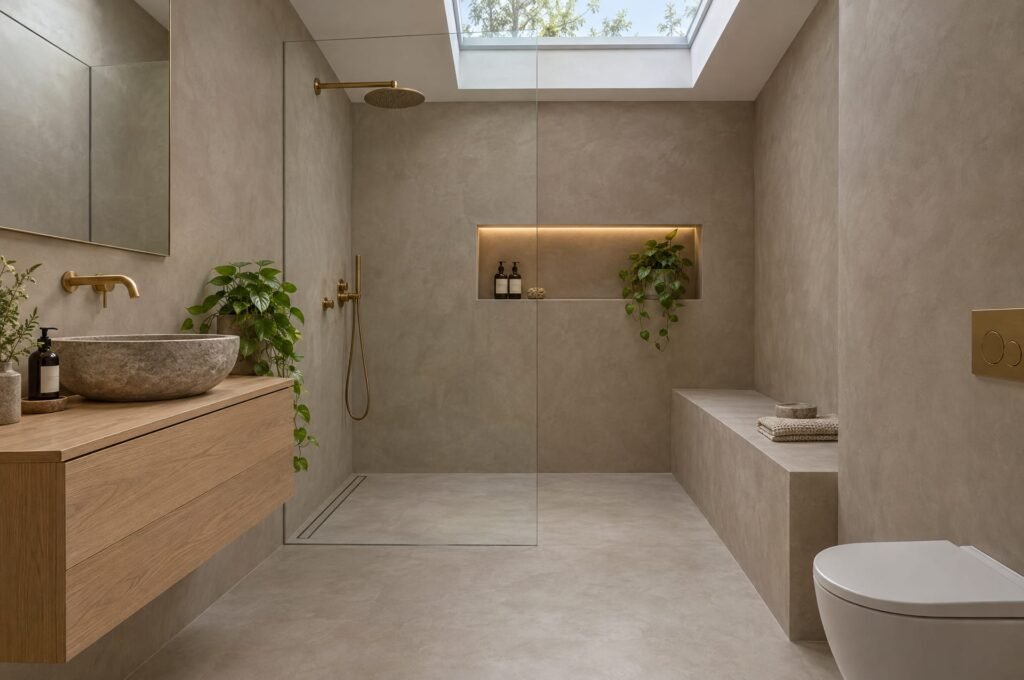
Microcement is a polymer-modified cement coating applied by hand in several thin layers — typically two to three millimetres in total — then sealed with a protective water-based sealer. It bonds to most rigid, stable surfaces, including well-adhered existing tiles, and creates one continuous surface across floors, walls, shower trays, benches and even vanity units.
Side-by-side comparison
| Microcement | Tiles | |
|---|---|---|
| Look | Seamless, calm, minimalist; subtle cloudy texture | Huge variety of colours, patterns, sizes and textures |
| Grout lines | None | Yes (fewer with large-format tiles) |
| Cleaning | Wipe-clean surface; nothing to scrub out of grout | Grout lines can discolour and need maintenance |
| Scratch & impact resistance | Good, but can scratch or chip under heavy impact | Very high (porcelain especially) |
| Waterproofing | Water-resistant when sealed; tanking needed in showers | Tiles and grout aren’t fully waterproof; tanking needed in showers |
| Over existing tiles? | Often yes, if tiles are sound | Possible but adds thickness; usually stripped |
| Installation time | Typically 5–7 days including curing | Typically 3–5 days for a standard bathroom |
| Repairs | Patch repairs possible but may be visible | Individual tiles can be replaced (if spares exist) |
| Maintenance | Reseal high-wear areas every few years | Regrout/reseal occasionally |
| Typical cost | Mid-to-high; similar to premium tiling | Low (standard ceramic) to very high (stone, large-format) |
Looks: seamless vs pattern
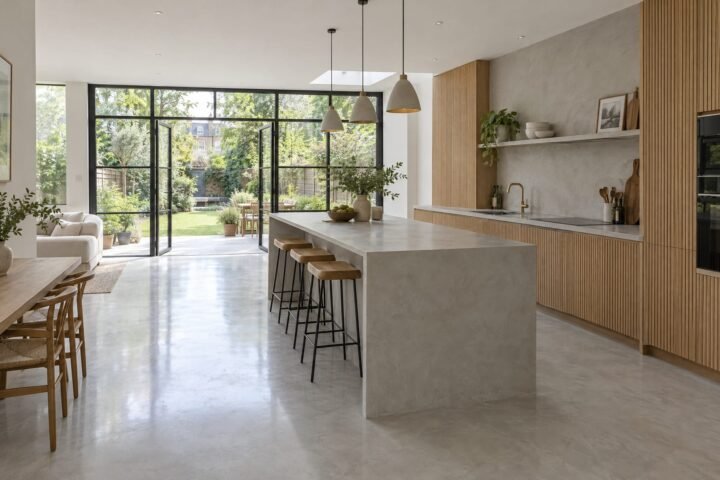
This is usually the deciding factor. Microcement gives a quiet, spa-like continuity that makes a small bathroom feel larger — there are no lines breaking up the space, and the same finish can wrap the floor, walls, shower and a built-in bench. It suits minimalist, Japandi, Mediterranean and contemporary interiors.
Tiles offer far more variety: zellige, terrazzo, encaustic patterns, marble-effect porcelain, metro tiles, mosaics. If you love pattern or want a particular period look, tiles win.
Cleaning and hygiene
Grout is the weak point of most tiled bathrooms: it’s porous, it discolours and it’s where mould tends to start. With microcement there is no grout at all — just a sealed surface you wipe down with a pH-neutral cleaner. Avoid harsh, acidic limescale removers on both finishes; they can damage sealers and grout alike.
Durability
Porcelain tiles are extremely hard. Microcement is very durable in normal bathroom use, but it is a thin coating — a dropped heavy object can chip it, and sharp grit can scratch the sealer on floors. The sealer is what takes most of the wear, so high-traffic floors may need resealing every few years. Our microcement floors guide goes into this in more detail.
The biggest factor in microcement’s durability is what’s underneath. It must go onto a rigid, stable base. Timber floors that flex need to be overboarded first, and loose or hollow tiles must be removed. A good installer will check this carefully at survey.
Waterproofing — the bit people forget
Neither tiles nor microcement are a waterproofing system on their own. In a shower or wet room, the real protection is the tanking membrane installed beneath the finish. With tiles, water can track through grout; with microcement, the sealer resists water well, but tanking is still essential around showers. Any installer who suggests skipping it is cutting a corner you’ll regret.
Slip resistance
Smooth microcement can be slippery when wet. For bathroom floors and shower areas we add an anti-slip additive to the final sealer coats. With tiles, look for a suitable slip rating for wet areas — matt or textured porcelain is safer than polished.
Cost
A standard ceramic tile bathroom is usually cheaper than microcement. But compared with premium options — natural stone, large-format porcelain slabs or handmade zellige, which all need skilled fitting — microcement is often comparable. As a rough guide, a complete microcement bathroom in London commonly costs around £3,500–£7,000+ depending on size, preparation and tanking. See our London price guide for more.
Don’t forget the hidden savings: if microcement can go over your existing tiles, you avoid strip-out, skip hire, re-boarding and much of the dust and disruption.
What about tadelakt?
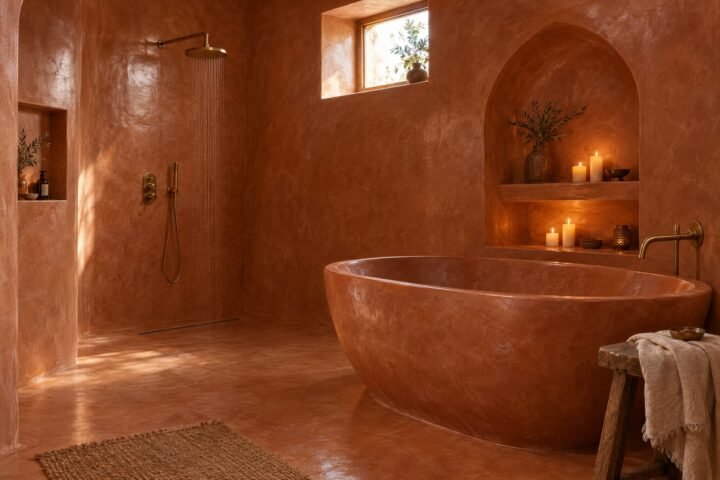
If you love the idea of a seamless bathroom but want something softer and more natural, consider tadelakt — a hand-polished Moroccan lime plaster sealed with olive-oil soap. It’s gorgeous on shower walls, baths and niches, though it needs a little more care than microcement and isn’t ideal for heavily used floors. Read our tadelakt guide for the full picture.
So which should you choose?
Microcement is the better choice if you want a seamless, contemporary look; hate cleaning grout; have a small bathroom that needs to feel bigger; or want to refresh existing tiles without a full strip-out.
Tiles make more sense if you love pattern; want the hardest possible surface (busy family bathrooms, very heavy use); or need the lowest possible budget with standard ceramics.
Many of our favourite bathrooms combine the two — or pair microcement floors with polished plaster walls outside the splash zone. If you’d like an honest view on your own bathroom, book a free survey and we’ll bring samples.

We apply Venetian plaster, Marmorino, tadelakt and microcement across London and the Home Counties. More about us · Get a free quote