Microcement floors in brief
- A seamless, 2–3 mm hand-trowelled finish that can flow through kitchens, living areas, hallways and bathrooms.
- Works well with underfloor heating; can often go over existing tiles or screed.
- Needs a rigid, stable, dry substrate — timber floors usually need overboarding first.
- Typically £80–£160 per m² professionally installed in the UK, depending on area and preparation.
Microcement floors have become a favourite for London kitchen extensions, open-plan living spaces and bathrooms — a calm, continuous surface that looks like polished concrete without the weight, thickness or saw-cut joints. But a floor takes more punishment than a wall, so it pays to understand exactly what you’re getting.
What is a microcement floor?
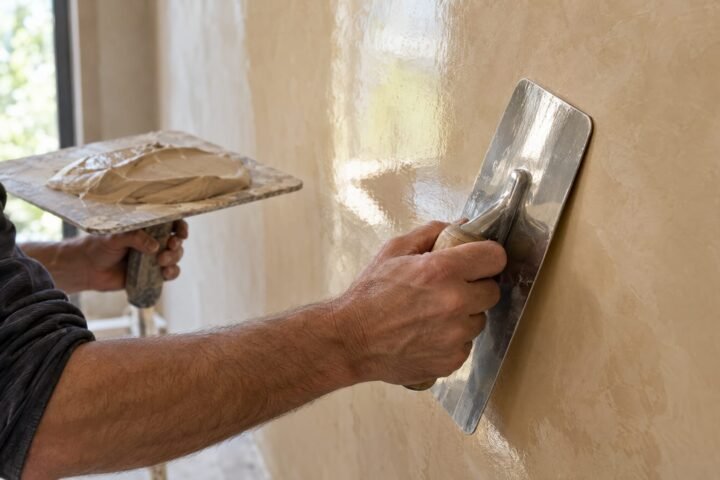
Microcement is a polymer-modified cement coating with very fine aggregates. On floors, it’s typically applied as a primer, two base coats (sometimes with a reinforcing mesh), two finer finishing coats and several coats of protective sealer. The total thickness is usually just two to three millimetres — so it can go over many existing floors without raising levels or trimming doors.
The pros
- Seamless: one continuous surface, room to room, with no grout lines or joints (structural movement joints aside).
- Thin: ideal for renovations — often no need to dig up existing tiles or screed.
- Underfloor heating friendly: the thin layer warms up quickly and conducts heat well.
- Versatile: the same finish can continue up stairs, onto an island, into a shower and up the walls.
- Easy to clean: a sealed surface with nothing to trap dirt.
- Design freedom: a wide range of colours and subtle textures, from warm whites to deep charcoals.
The cons (and how to manage them)
- It’s only as good as the base. Movement in the substrate can cause cracking. A careful survey and correct preparation are essential.
- It can scratch. Grit underfoot and dragged furniture can mark the sealer. Felt pads, doormats and occasional resealing keep it looking good.
- Heavy impacts can chip it. Dropping a cast-iron pan is not ideal on any floor, but microcement is a thin coating.
- It isn’t a DIY job. Results depend heavily on skill and on following each system’s rules for drying times and sealing.
- It has natural variation. Hand-applied microcement has subtle clouding and trowel marks — part of the charm, but not for anyone wanting a perfectly uniform look.

Can microcement go on any floor?
It can go on most rigid, sound, dry floors:
- Concrete and sand-cement screeds — ideal once fully dry. New screeds need proper drying time and a moisture test.
- Existing tiles — usually fine if every tile is well bonded. Grout lines are filled and a bonding primer applied. Hollow or loose tiles must be lifted.
- Anhydrite (calcium sulphate) screeds — possible with the right preparation and primer.
- Timber floors — suspended timber floors flex, which can crack thin finishes. They normally need overboarding with a suitable rigid board system first. This is common in Victorian and Edwardian London homes, and we always assess it at survey.
Microcement and underfloor heating
Microcement and underfloor heating are a great match. Because the layer is so thin, heat transfers efficiently and the floor feels pleasantly warm. Two rules: the heating should be off (or very low) during installation and curing, and then brought back up gradually over several days. Your installer should give you a commissioning schedule.
Is a microcement floor slippery?
A smooth, sealed floor can be slippery when wet, just like polished stone or porcelain. For kitchens and especially bathrooms, we add an anti-slip additive to the final sealer coats to increase grip without changing the look much. In showers, a slightly more textured finish can also help.
How long does installation take?
For a typical kitchen or living-area floor, expect around five to seven working days from preparation to final seal, because each layer needs drying time. Light foot traffic is usually possible a day or two after the final sealer; furniture can go back after a few more days; and full cure takes around a week. Avoid rugs and heavy items until the sealer has fully cured.
How much does a microcement floor cost?
As a guide, professionally installed microcement floors in the UK typically cost around £80–£160 per m². Larger, simple areas on a good base sit at the lower end; small, complex or heavily prepared floors (including timber overboarding) sit at the upper end or above. See our London price guide for how this compares with other finishes.
Caring for a microcement floor
- Sweep or vacuum regularly to remove grit.
- Mop with warm water and a pH-neutral floor cleaner — avoid bleach, ammonia, acids and wax-based polishes unless recommended for your sealer.
- Use felt pads on furniture legs and doormats at entrances.
- Wipe spills promptly, especially oils, wine and acidic foods.
- Reseal high-traffic areas every few years to keep protection strong.
Microcement floors in commercial spaces
Microcement is popular for restaurants, shops, offices and showrooms because it’s seamless and quick to install over existing floors. Heavier commercial traffic calls for tougher sealers and a planned maintenance regime — see our commercial service and the guide to polished plaster in commercial interiors.
Is a microcement floor right for you?
If you want a calm, seamless, contemporary floor — especially in an open-plan space or with underfloor heating — microcement is hard to beat. If you have a very busy household with heavy wear, or want the absolute hardest surface, porcelain tiles may suit you better; our microcement vs tiles comparison sets out the trade-offs honestly.
We install microcement floors across London and the Home Counties. Book a free survey and we’ll assess your floor and bring samples.

We apply Venetian plaster, Marmorino, tadelakt and microcement across London and the Home Counties. More about us · Get a free quote