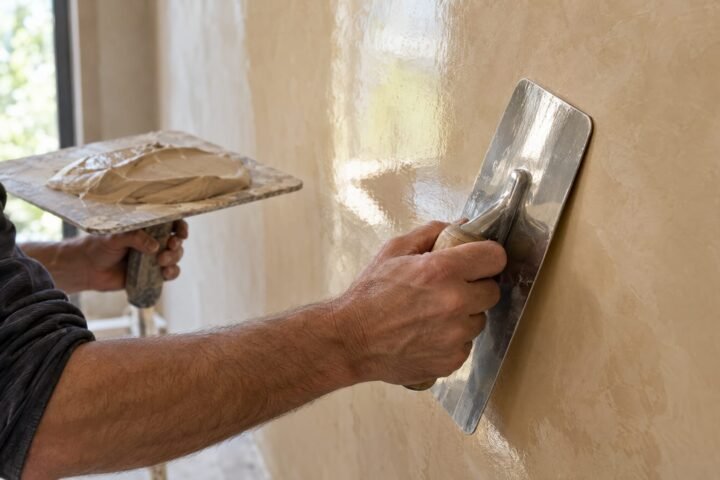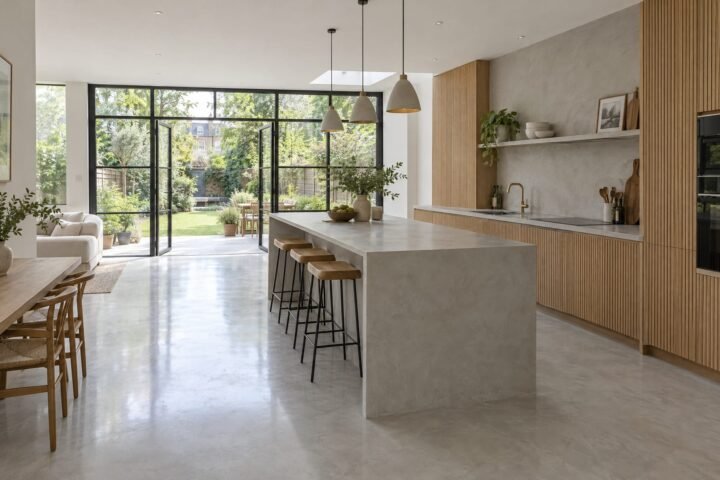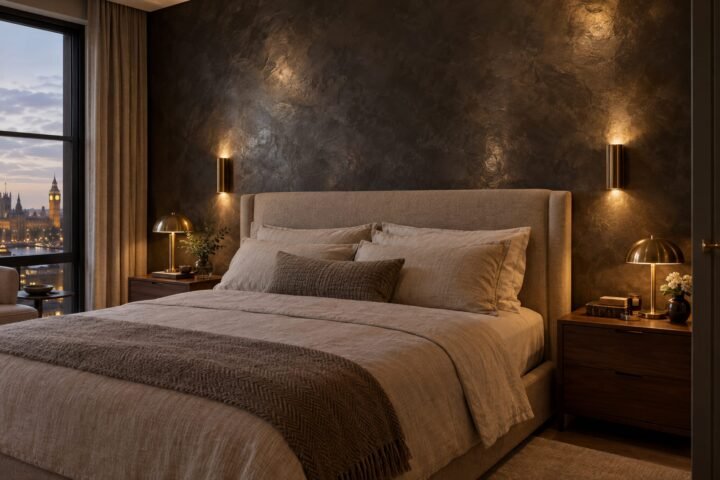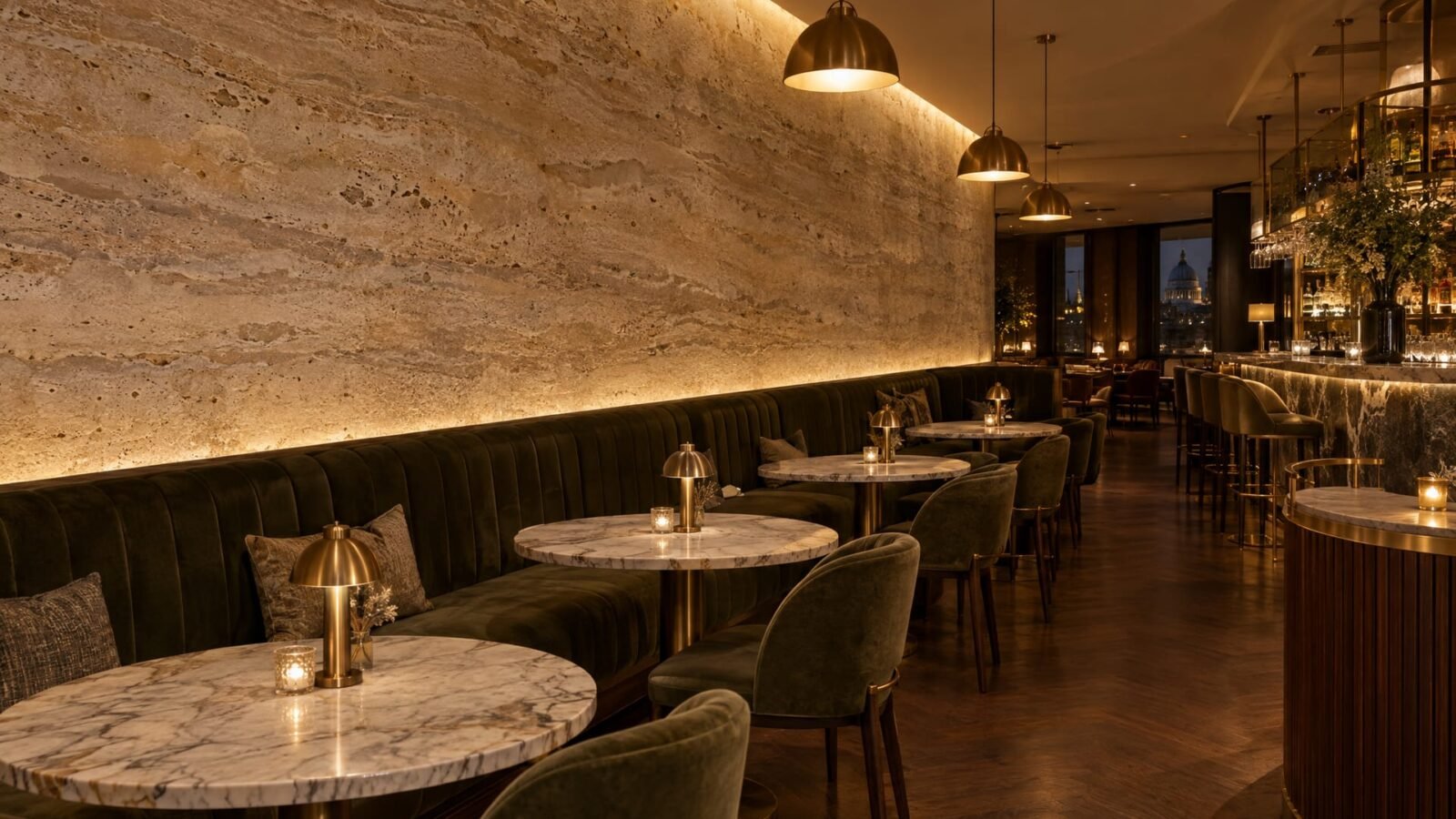
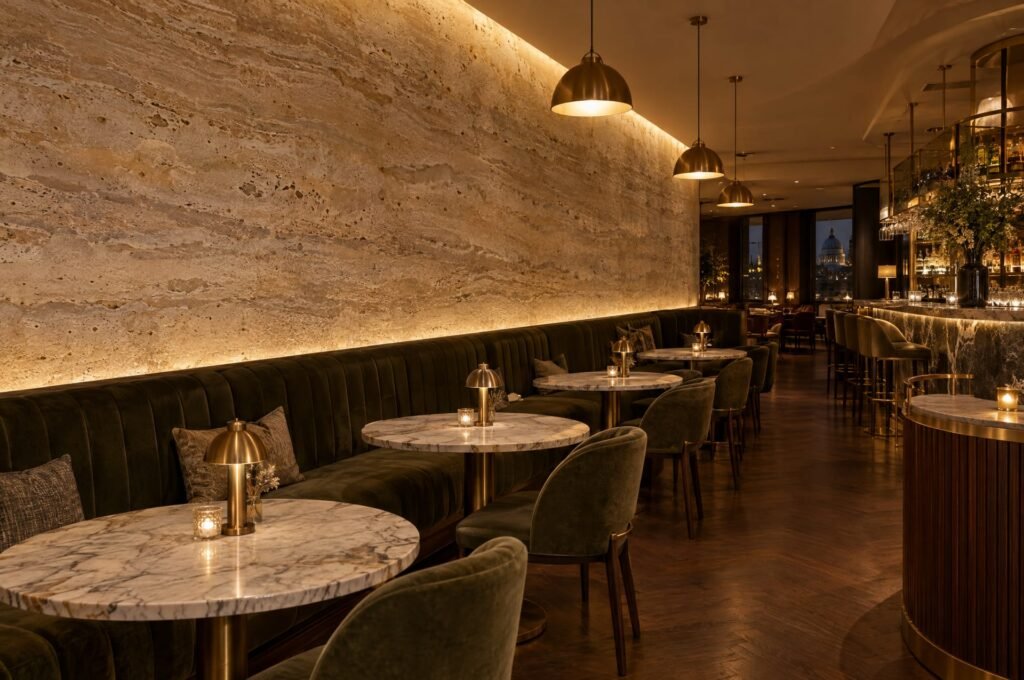
Walk into many of London’s most memorable hotels, restaurants and boutiques and you’ll find walls with real depth — polished plaster glowing in a lobby, travertine-effect texture wrapping a banquette, a seamless microcement bar. Hand-applied finishes have become a signature of thoughtful commercial design. Here’s why, and what to consider when specifying them.
Why designers specify polished plaster
- Atmosphere. Plaster has a softness and depth that responds beautifully to lighting, creating warmth and a sense of craft that guests notice.
- Seamless surfaces. No panel joints or tile grids — just continuous walls, curves, ceilings and counters.
- Bespoke colour and texture. Finishes can be tinted and textured to match a brand or design concept exactly.
- Repairable. Many finishes can be spot-repaired, so a scuffed corridor doesn’t mean closing for a full redecoration.
- Natural materials. Lime-based systems are mineral, breathable and low in VOCs — increasingly important for sustainability-focused projects.
Where polished plaster works in commercial spaces
Hotels
Lobbies and receptions in satin or high-gloss Venetian plaster; corridors and lift lobbies in hard-wearing Marmorino or textured finishes; spa areas and guest bathrooms in tadelakt or microcement.
Restaurants and bars
Feature walls, curved banquette backs, bar fronts and ceilings — often in travertine-effect, lime or metallic finishes that create intimacy under warm lighting. Microcement is popular for bar tops, counters and washrooms.
Retail and showrooms
Display walls, plinths, counters and changing rooms in calm, gallery-like finishes that let products stand out — microcement floors flowing through the space.
Offices and workplaces
Reception walls, meeting rooms and breakout spaces where a hand-made finish adds character to an otherwise uniform fit-out.
Practical considerations
Durability and wear
Commercial interiors see far more contact than homes: luggage, trolleys, chairs, shoulders, hands. We recommend:
- Textured or matt finishes in high-contact zones — they disguise wear better than high gloss
- Protective waxes or sealers specified for the level of traffic
- Considered detailing at corners, door frames and seating heights
- A small stock of matching material kept for future touch-ups
Cleaning regimes
Operations teams need to know what they can and can’t use. Lime finishes must not be cleaned with acidic or abrasive products. We provide written maintenance guidance at handover so cleaning contractors protect the finish rather than damage it.
Fire safety
Commercial specifications must meet the relevant reaction-to-fire requirements. Mineral lime plasters are inherently non-combustible, but sealers, primers and substrates matter too. We supply product data sheets and classifications so the design team and building control can confirm compliance for the whole build-up.
Moisture and wet areas
Washrooms, spas and kitchens need appropriate systems — tadelakt or microcement over correct waterproofing in wet zones, and suitable sealers elsewhere.
Samples, mock-ups and sign-off
Because polished plaster is hand-made, approval is critical. We produce sample boards to the design brief and, where useful, full-size mock-up panels on site so the client, designer and contractor can sign off colour, texture and sheen under the project’s actual lighting. Our colour ideas guide is a good starting point for briefs.
Programme and site working
- Realistic durations. Each coat needs drying time, so programmes must allow for multiple visits per area.
- Sequencing. Plastering typically follows first-fix trades and precedes final flooring, joinery and fixtures — with protection afterwards.
- Out-of-hours working. For live venues, we can work nights and weekends and phase areas to keep trading.
- Compliance. RAMS, site inductions and working to the principal contractor’s rules under CDM 2015.
Costs
Commercial costs depend on finish, area, access, programme constraints and specification. Large, repetitive areas can be more economical per m² than small residential jobs, while out-of-hours working, complex detailing and access equipment add cost. Our price guide covers typical per-m² ranges, and our microcement floors guide covers floor-specific considerations.
Working with us
We work with owners, operators, interior designers, architects and main contractors across London and the Home Counties. Send us drawings, a specification or simply photographs and approximate areas, and we’ll respond with questions, a programme and a quote. Visit our commercial polished plaster page or get in touch.

We apply Venetian plaster, Marmorino, tadelakt and microcement across London and the Home Counties. More about us · Get a free quote