At a glance
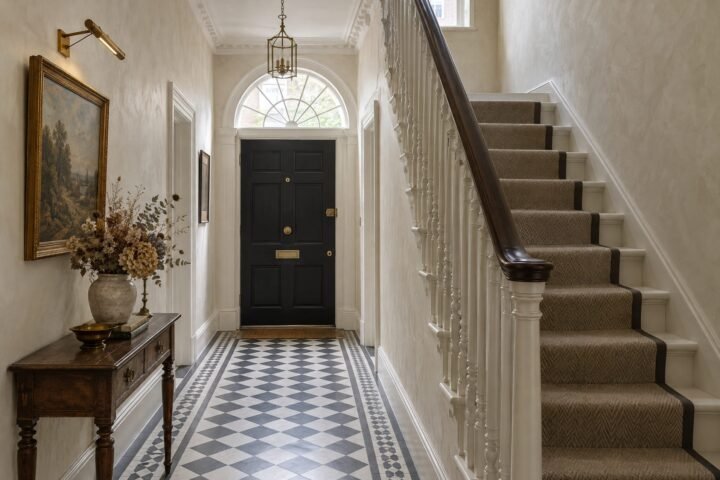
- Marmorino: matt to satin, stone-like, slightly textured, forgiving and practical — great for hallways, large walls and period homes.
- Stucco veneziano: high gloss, deep and reflective, glassy smooth — a showpiece for feature walls, dining rooms and statement spaces.
- Both are genuine lime-and-marble plasters; the difference is mainly the marble grain size, the number of coats and how hard the surface is burnished.
When people picture “Venetian plaster”, they usually imagine one of two very different finishes. One is soft, chalky and calm, like honed limestone. The other is deep and glossy, like a polished slab of marble. Those are Marmorino and stucco veneziano — the two classic lime plasters of Venice.
Both are beautiful. But they behave differently in a home, and choosing the right one for each room makes a big difference to how happy you’ll be with the result.
What they have in common
Both finishes are made from the same basic ingredients: slaked lime putty, crushed marble and mineral pigments. Both are applied by hand with steel trowels, both are breathable, both are naturally mould-resistant and both harden over time as the lime cures. If you’re new to the material, start with what is Venetian plaster?
Marmorino: soft, stone-like and practical
Marmorino uses slightly coarser marble grains. It’s usually applied in two or three coats and compacted with the trowel, but not burnished to a high shine, so it keeps a fine, stony character with gentle tonal movement.
- Sheen: matt to satin, depending on how it’s finished
- Feel: smooth but with a subtle, velvety texture
- Look: calm, natural and understated
- Practicality: very forgiving — it doesn’t highlight minor wall undulations, and scuffs can usually be touched up locally
- Where it shines: hallways, stairwells, large living spaces, bedrooms, period homes — and exteriors, where it has been used in Venice for centuries
Stucco veneziano: deep, glossy and dramatic
Stucco veneziano — the classic polished Venetian plaster — uses very fine marble and lime. It’s built up in three or four ultra-thin coats, each pressed hard with the trowel, then burnished and waxed to a deep, reflective gloss.
- Sheen: satin to mirror-like high gloss
- Feel: glassy-smooth and cool to the touch
- Look: luxurious, with depth and marble-like clouding that seems to glow
- Practicality: very hard and wipeable once waxed, but gloss reflects light, so it shows wall imperfections more and needs flatter walls
- Where it shines: feature walls, dining rooms, powder rooms, studies, bars, hotel receptions — anywhere you want impact
Side-by-side comparison
| Marmorino | Stucco veneziano | |
|---|---|---|
| Marble grain | Coarser | Very fine |
| Typical coats | 2–3 | 3–4 + wax |
| Sheen | Matt to satin | Satin to high gloss |
| Wall preparation | Forgiving of minor undulations | Needs very flat, well-prepared walls |
| Colour | Reads softer and slightly lighter | Reads deeper and richer |
| Busy areas | Excellent — marks less visible | Good when waxed; shows marks in raking light |
| Exterior use | Yes, with correct detailing | Interior only |
| Relative cost | Usually a little lower | Usually higher (more coats and burnishing) |
How sheen changes colour
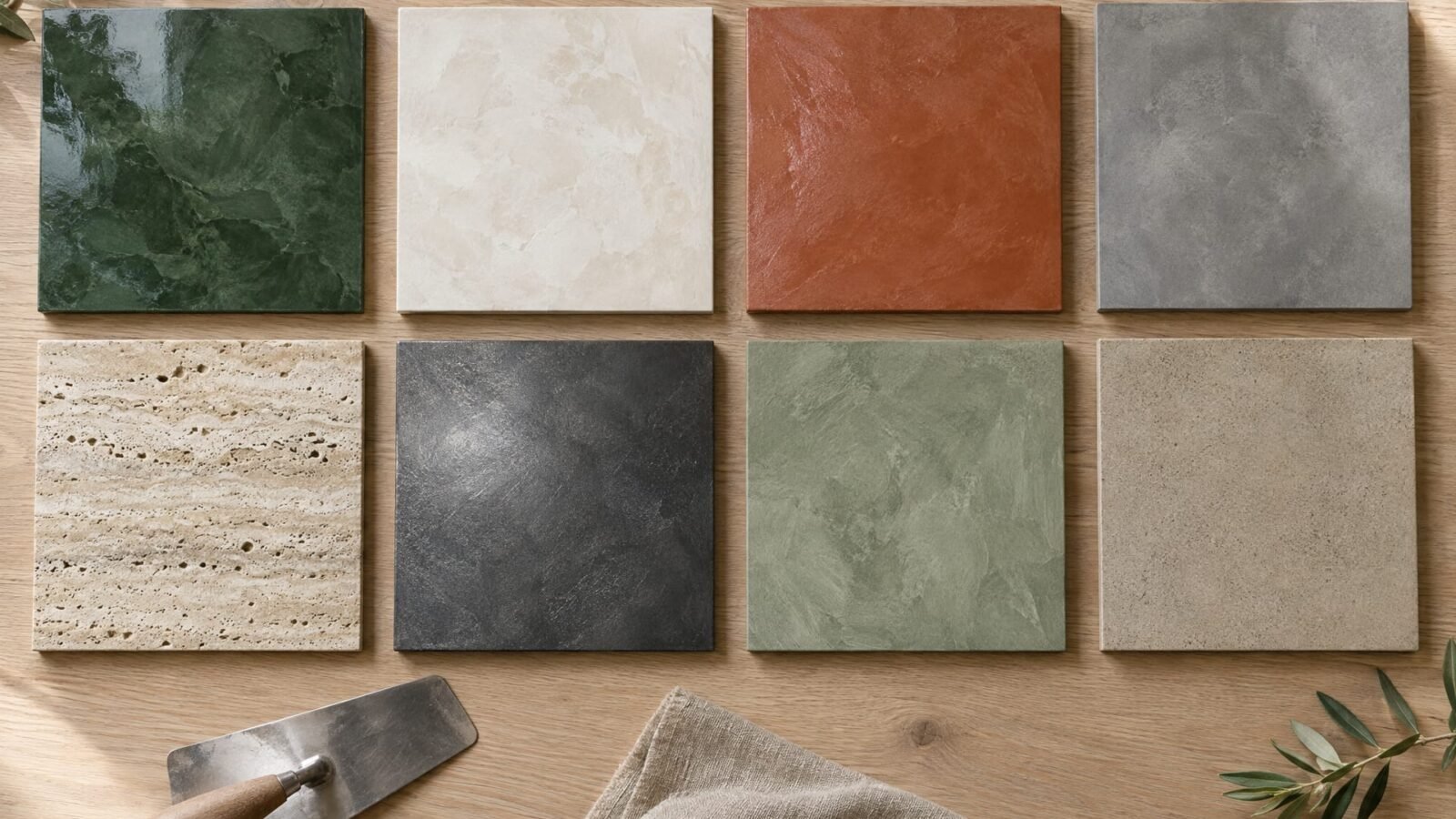
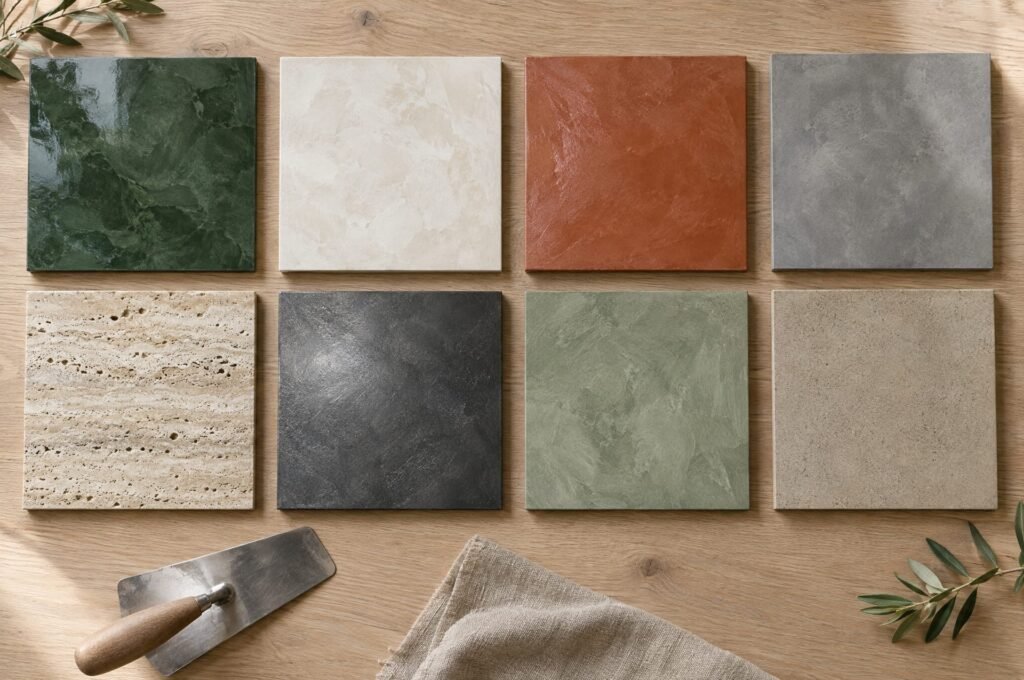
One thing that surprises clients is how much the finish affects colour. The same pigment looks softer, chalkier and slightly lighter in matt Marmorino, and deeper, more saturated and darker in high-gloss stucco. That’s why we always make sample boards in the actual finish you’re considering, not just a colour swatch. For ideas, see our favourite plaster colours for 2026.
Which should you choose?
Choose Marmorino if…
- You want a calm, natural, stone-like look
- The walls are older or not perfectly flat
- It’s a hallway, stairwell or busy family space
- You’re finishing a large area and want to manage budget
Choose stucco veneziano if…
- You want a true statement wall with depth and reflection
- It’s a dining room, study, bar, powder room or bedroom feature wall
- The walls are flat — or you’re happy to invest in preparation
- You love rich, saturated colour
Many homes use both: Marmorino in the hall, stairs and landing, with a high-gloss stucco wall in the dining room. The two sit beautifully together.
Caring for each finish
Both are easy to live with: dust or wipe with a soft, damp cloth and mild pH-neutral soap, and avoid abrasive or acidic cleaners. High-gloss stucco benefits from a fresh coat of wax every few years in busy areas. Read our full guide to care, lifespan and repairs.
See both in person
The difference between Marmorino and stucco is something you really need to see and touch. We’ll bring both to your free survey, made up in colours that suit your home — anywhere in London or the Home Counties. Book your survey.

We apply Venetian plaster, Marmorino, tadelakt and microcement across London and the Home Counties. More about us · Get a free quote