Tadelakt in a nutshell
- A traditional Moroccan lime plaster, compacted and polished with stones.
- Treated with black olive-oil soap, which reacts with the lime to create a water-resistant surface.
- Perfect for shower walls, wet rooms, baths, basins and niches; less suited to heavily used floors.
- Needs gentle, natural cleaning and occasional re-soaping — but rewards you with a uniquely soft, sculptural finish.
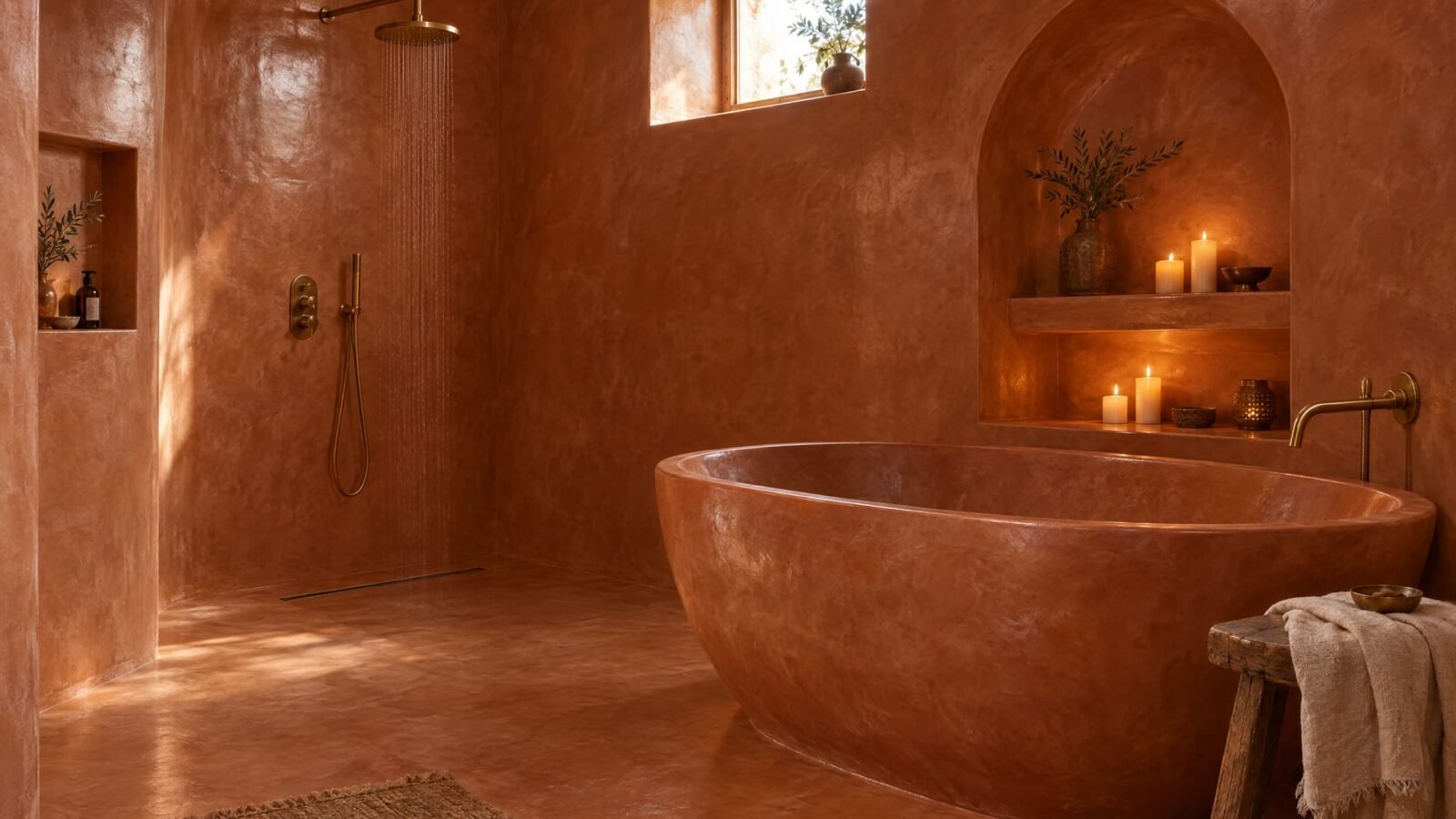
Tadelakt is one of the most beautiful materials you can use in a bathroom. Soft to the touch, gently undulating and glowing with a waxy sheen, it brings a calm, spa-like atmosphere that’s impossible to achieve with tiles. It has also been around for centuries — long before anyone talked about “seamless bathrooms”.
Where tadelakt comes from
Tadelakt originates in Morocco, particularly the region around Marrakech, where local limestone produces a lime well suited to the technique. It was traditionally used in hammams (steam baths), palaces and riads, and to waterproof water cisterns. The name comes from a Berber word meaning roughly “to rub” or “to knead” — a nod to the long hand-polishing that defines it.
How is tadelakt made water-resistant?
The magic happens in two stages:
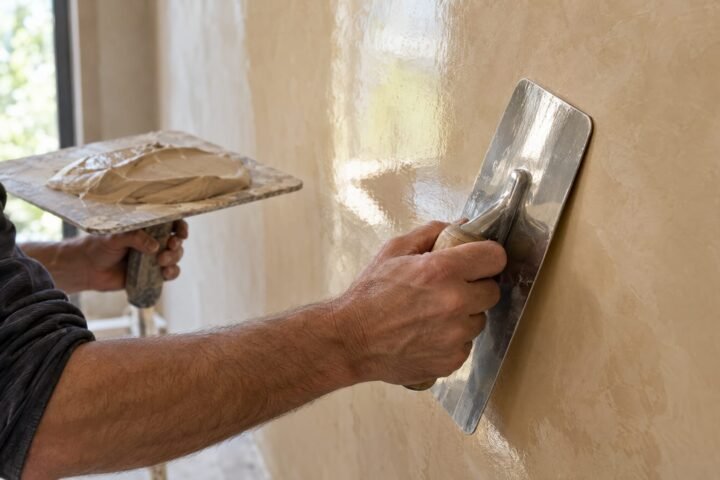
- Compaction. As the lime plaster begins to firm up, it is pressed and polished repeatedly with a smooth, hard stone. This compacts the surface, closing its pores and creating a dense, slightly shiny skin.
- Soaping. Black soap made from olive oil is worked into the surface and polished again. The soap reacts with the lime to form a water-repellent layer within the surface.
The result sheds water beautifully. It’s important to understand, though, that tadelakt is water-resistant rather than a waterproofing membrane. In showers, the substrate and detailing behind it matter enormously, and a properly designed build-up is essential for long-term performance.
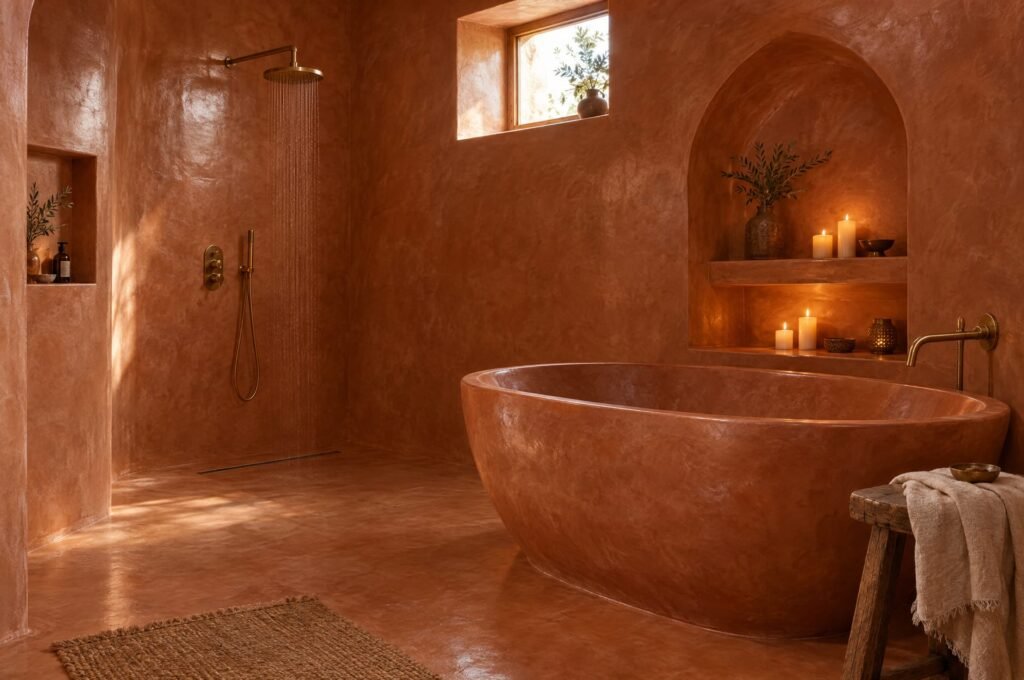
Where to use tadelakt
- Shower walls and wet rooms — seamless, with no grout to clean.
- Bath surrounds and sculpted baths — tadelakt can be formed into curved, built-in baths.
- Basins and vanity tops — sculpted, organic shapes.
- Niches, arches and benches — it follows curves beautifully.
- Feature walls and hammam-style spaces in homes, spas and boutique hotels.
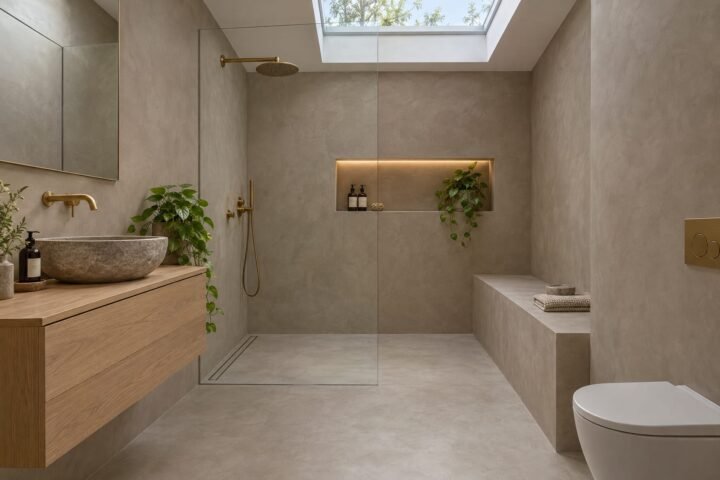
For floors, tadelakt is less ideal: constant foot traffic and grit wear the polished surface. Many clients pair tadelakt walls with a microcement or stone floor.
Pros and cons
Why people love it
- Completely seamless and sculptural
- Natural: lime, pigment and soap
- Naturally mould-resistant thanks to lime’s alkalinity
- Uniquely soft, tactile and warm-looking
- Beautiful earthy colours with gentle variation
What to be aware of
- It’s labour-intensive, so it costs more per m² than many finishes
- It needs gentle cleaning — no acidic or harsh products
- Periodic re-soaping or waxing keeps it performing well
- Hard water can leave marks if showers are never dried off
- Not the best choice for floors
Caring for tadelakt
- Clean with a soft cloth and a mild, natural soap — black olive-oil soap is ideal.
- Squeegee or towel-dry shower walls when you can, especially in hard-water areas like London.
- Never use bleach, limescale removers, vinegar or abrasive pads.
- Every so often, re-apply a thin layer of soap or a suitable wax and buff it in to refresh the protection.
Tadelakt vs microcement
| Tadelakt | Microcement | |
|---|---|---|
| Material | Natural lime + soap | Polymer-modified cement + sealer |
| Look | Soft, waxy, undulating, organic | Crisp, flat, contemporary |
| Best on | Walls, niches, baths, basins | Floors and walls |
| Maintenance | Gentle care, periodic re-soaping | Low; reseal floors every few years |
| Cost | Usually higher (labour) | Mid-to-high |
Our tadelakt and microcement service pages go into more detail, and if you’re also considering tiles, read microcement vs tiles.
How much does tadelakt cost?
Because tadelakt is applied and polished entirely by hand, at exactly the right moment in the drying process, labour is the main cost. It typically costs more per square metre than Venetian plaster or microcement, and curved or sculpted work costs more again. We quote after a free survey — and our price guide explains what drives costs for all our finishes.
Is tadelakt right for your bathroom?
If you love natural materials, want a truly unique, hand-made bathroom and are happy to give it a little gentle care, tadelakt is wonderful. If you want the lowest-maintenance option, microcement may suit you better — or combine them. For a wider look at what works where, read polished plaster in bathrooms and kitchens.
We apply tadelakt across London and the Home Counties. Book a free survey and we’ll bring samples.

We apply Venetian plaster, Marmorino, tadelakt and microcement across London and the Home Counties. More about us · Get a free quote