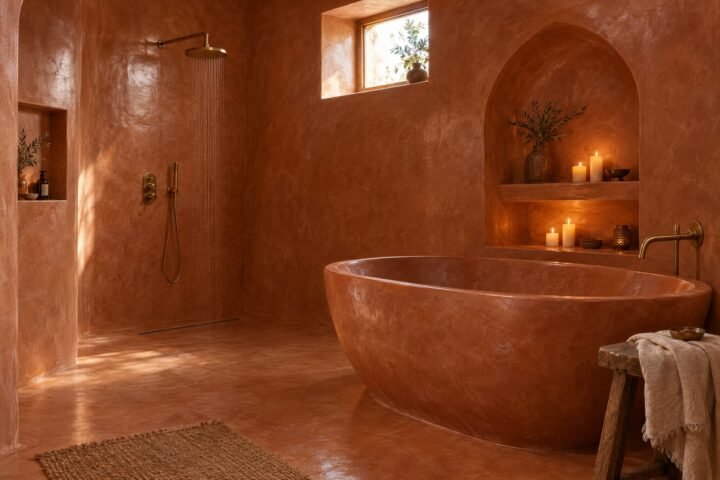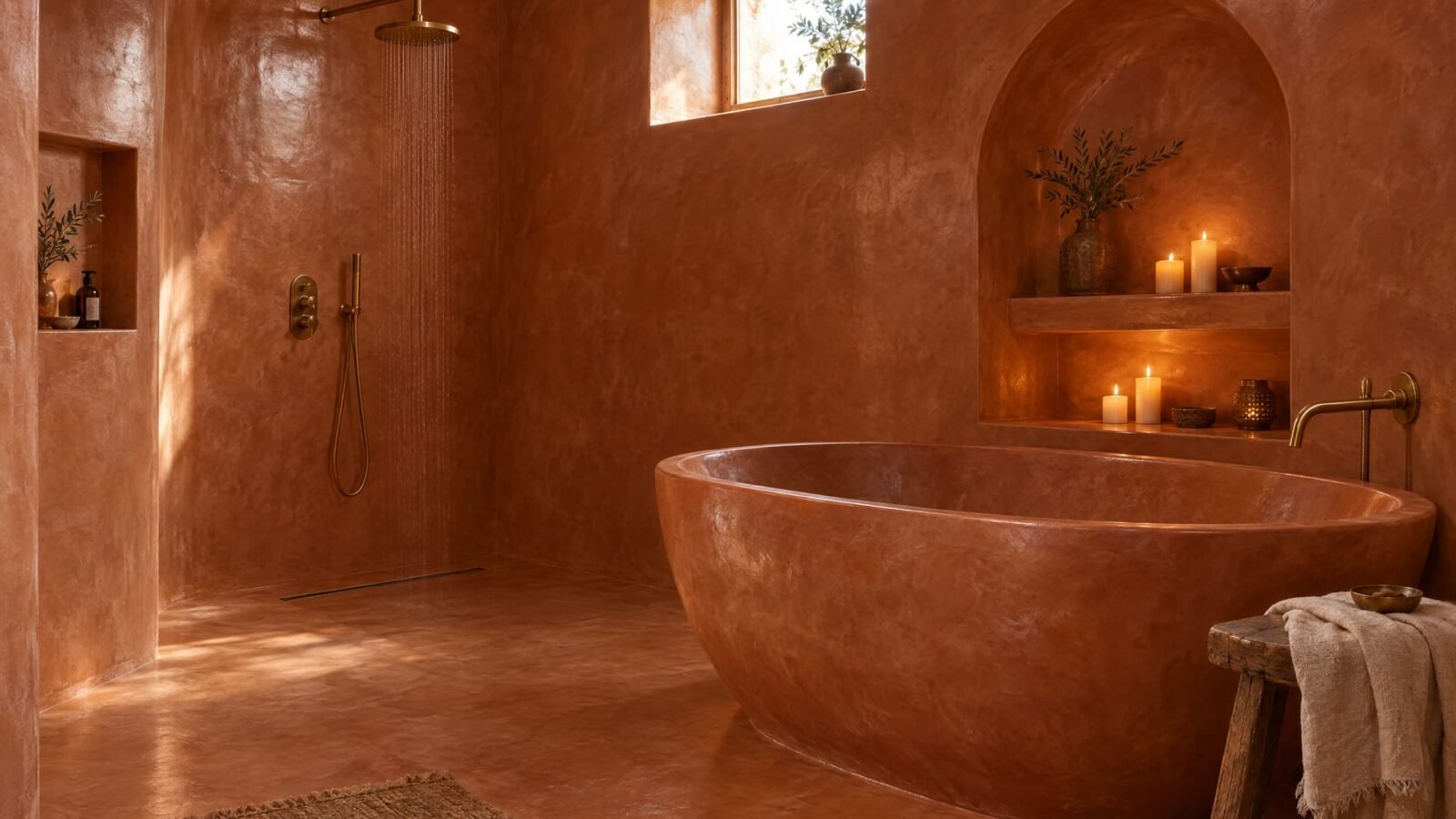
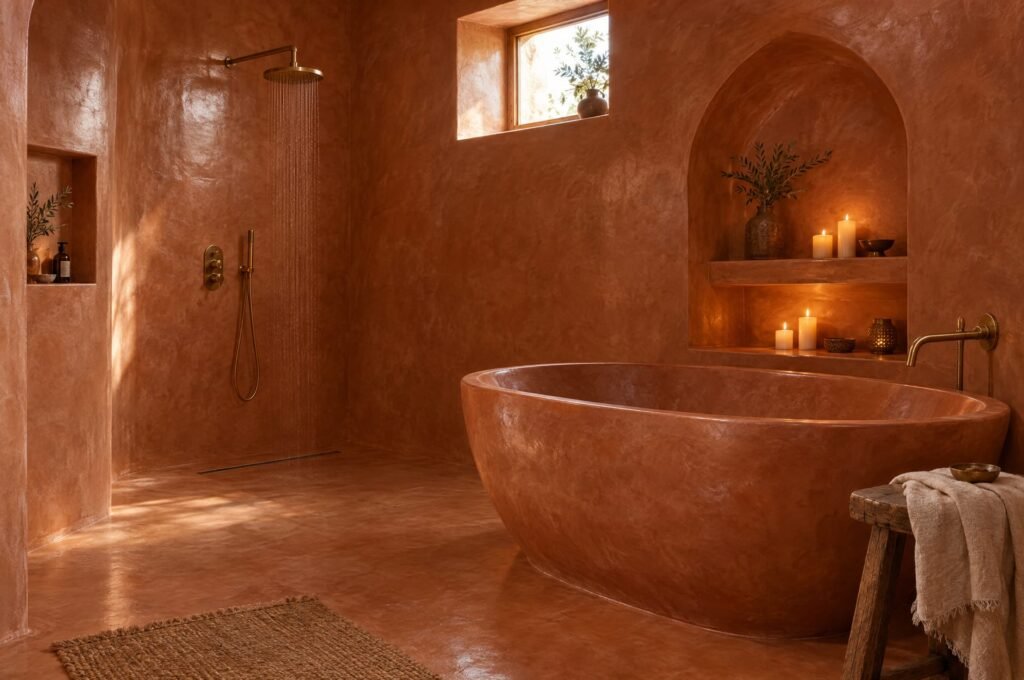
Tadelakt (pronounced ta-de-lakt) is a lime plaster from Morocco, traditionally used in hammams, palaces and riads around Marrakech. It is pressed and polished with smooth stones, then treated with black olive-oil soap, which reacts with the lime to create a soft, water-resistant sheen that feels almost like warm leather.
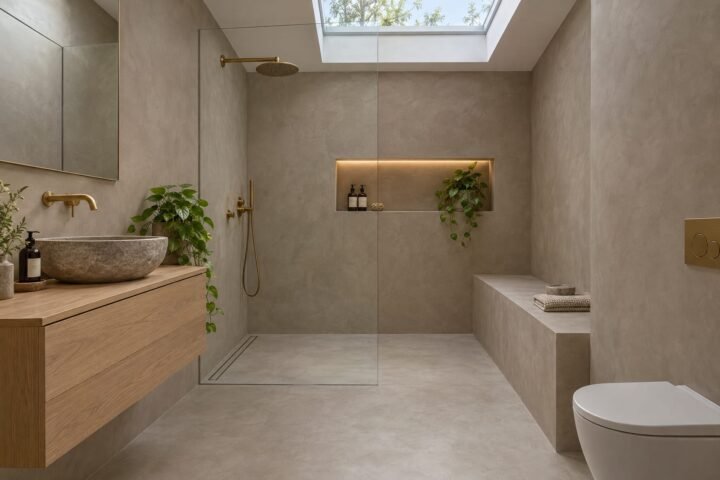
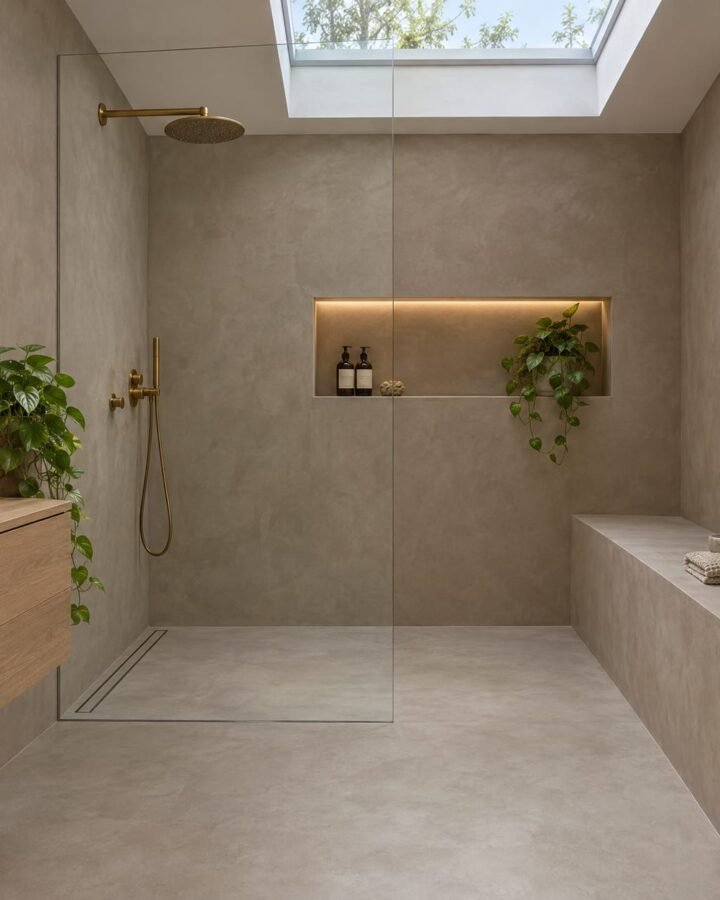
We use tadelakt for showers, wet rooms, bath surrounds, sculpted baths, basins and niches in London homes and boutique hospitality spaces. It is entirely seamless, follows curves beautifully and brings a natural, spa-like calm that tiles simply can’t.
Why choose tadelakt?
- Seamless and sculptural — wraps curved walls, arches, benches and built-in baths without a single joint.
- Natural — made from lime, pigments and soap. No plastics, no solvents.
- Water-resistant — the soap treatment forms a protective layer that sheds water.
- Mould-resistant — lime’s natural alkalinity discourages mould in steamy rooms.
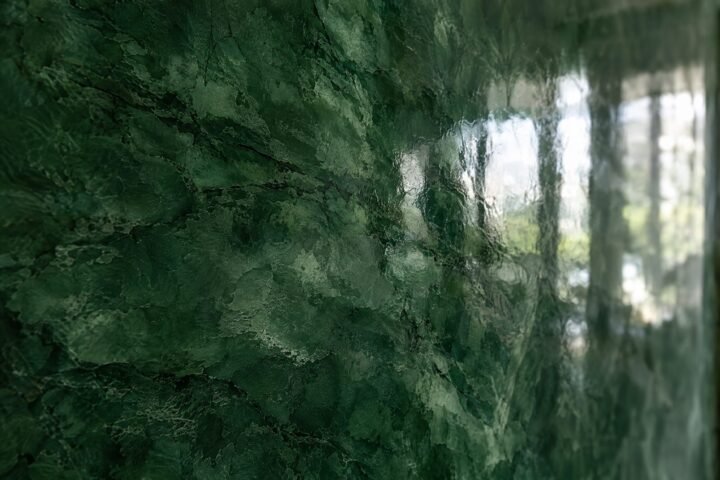
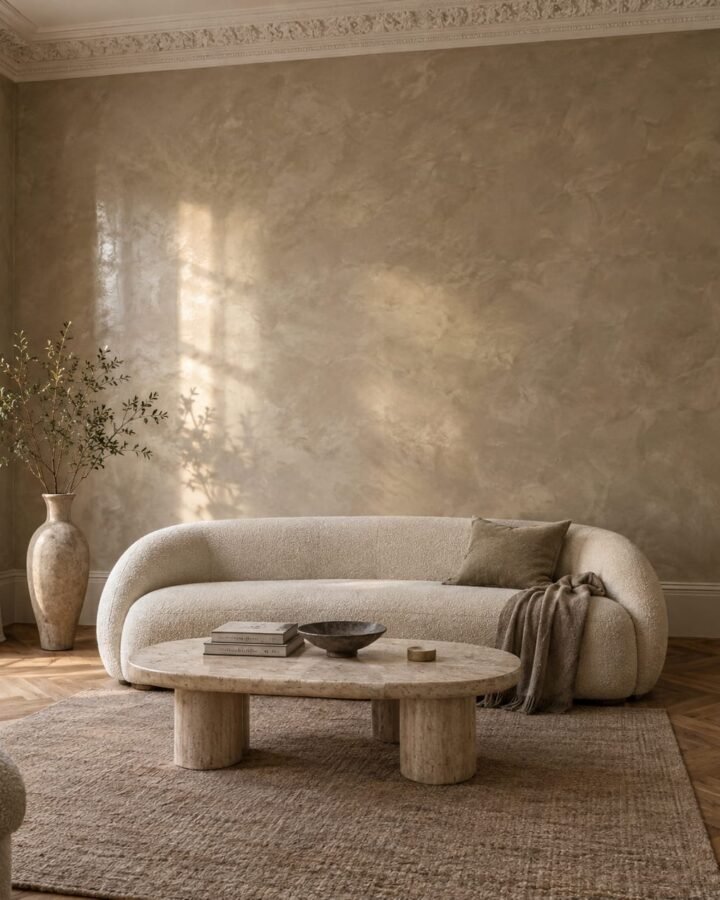
- Beautifully tactile — a soft, undulating, hand-polished surface with gentle tonal variation.
How tadelakt is applied
Tadelakt is all about timing. After preparing a suitable, sound substrate (and installing waterproofing where needed), we apply the lime plaster in two coats. As it begins to firm up, we compact it with a float, then polish it repeatedly with hard, smooth stones. Finally, black soap is worked into the surface and polished again, forming the water-repellent layer.
It is a slow, skilled process that can’t be rushed — and that is exactly what gives tadelakt its depth and durability. Our complete tadelakt guide covers the history, care and pros and cons in detail.
Tadelakt or microcement?
Both create seamless wet rooms, but they feel quite different:
- Tadelakt — natural, soft and organic, with a waxy sheen and gentle undulations. Best on walls, niches, baths and basins.
- Microcement — crisper and more contemporary, suitable for floors and walls, and lower-maintenance day to day.
Many of our bathrooms combine both: tadelakt walls and a microcement floor. If you’re also weighing up tiles, read microcement vs tiles and polished plaster in bathrooms.
Tadelakt colours
Tadelakt is coloured with natural mineral pigments. Earthy shades look especially beautiful: terracotta, clay, sand, ochre, warm white, rose and soft greys, through to deep charcoal. Colour varies gently across the surface — part of its hand-made charm. We’ll bring samples to your survey.
Caring for tadelakt
Clean with a soft cloth and a mild, natural soap; squeegee or towel-dry showers after use if you can; and avoid acidic or abrasive cleaners. Every so often, a fresh application of soap or wax refreshes the protective layer — we’ll show you how.
Tadelakt in London and beyond
We install tadelakt across London and the Home Counties, including Guildford, Windsor and Sevenoaks. Because it is labour-intensive, tadelakt typically costs more per square metre than other finishes — we provide a fixed quote after a free survey.