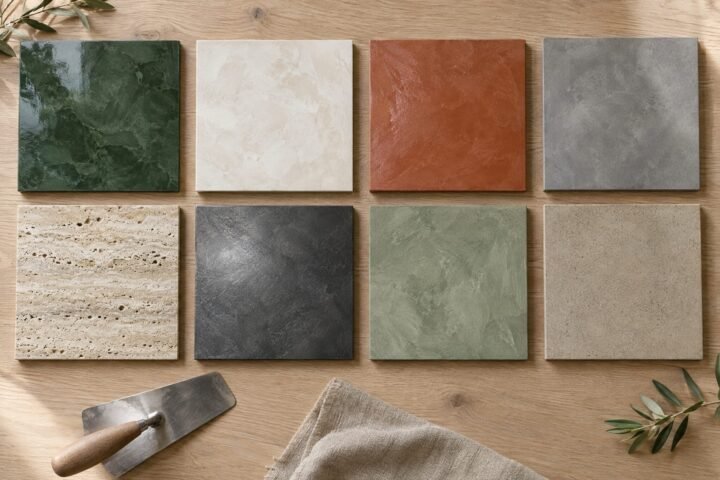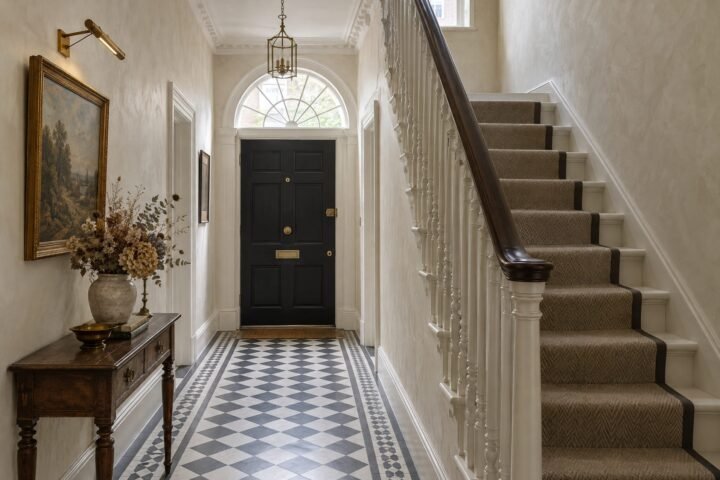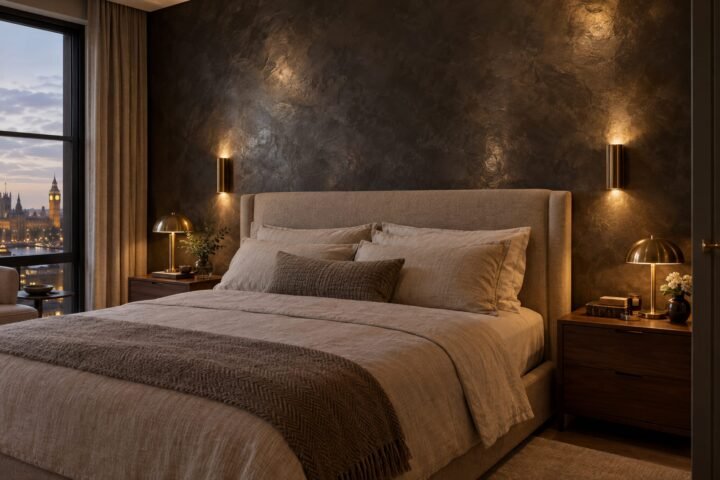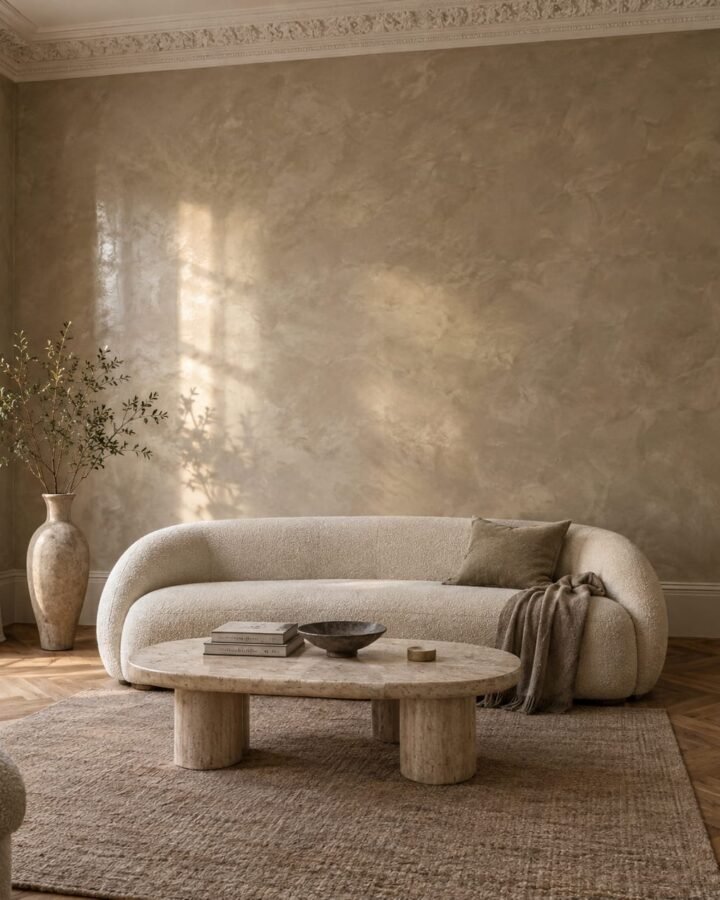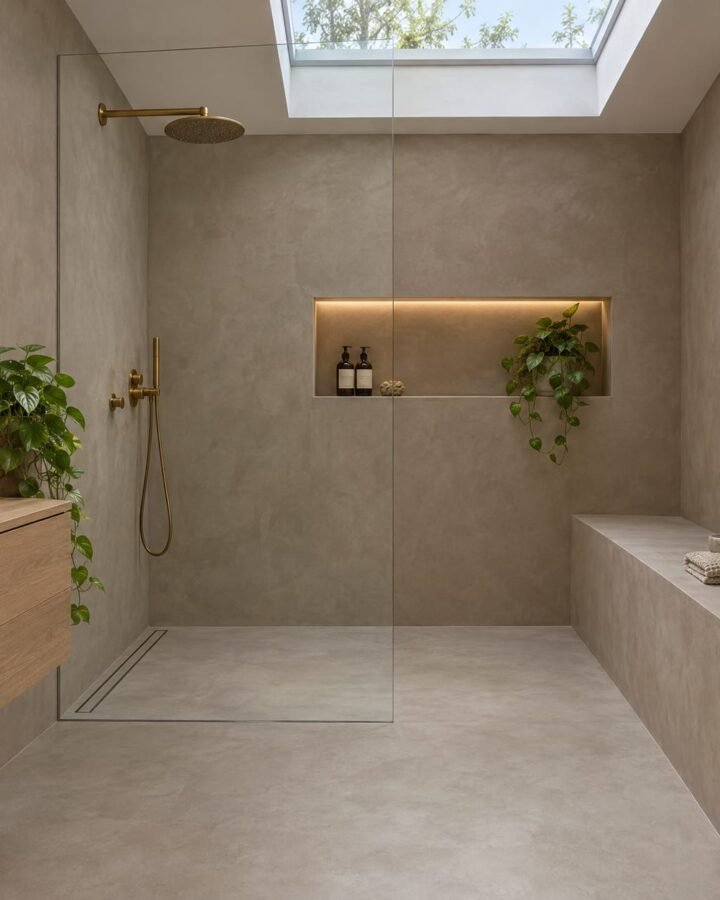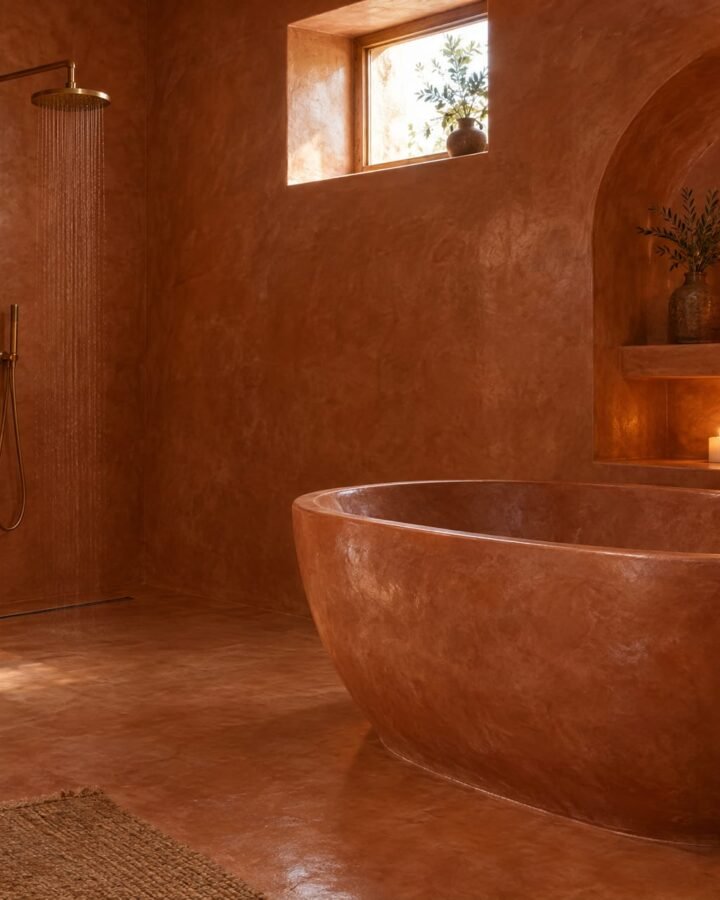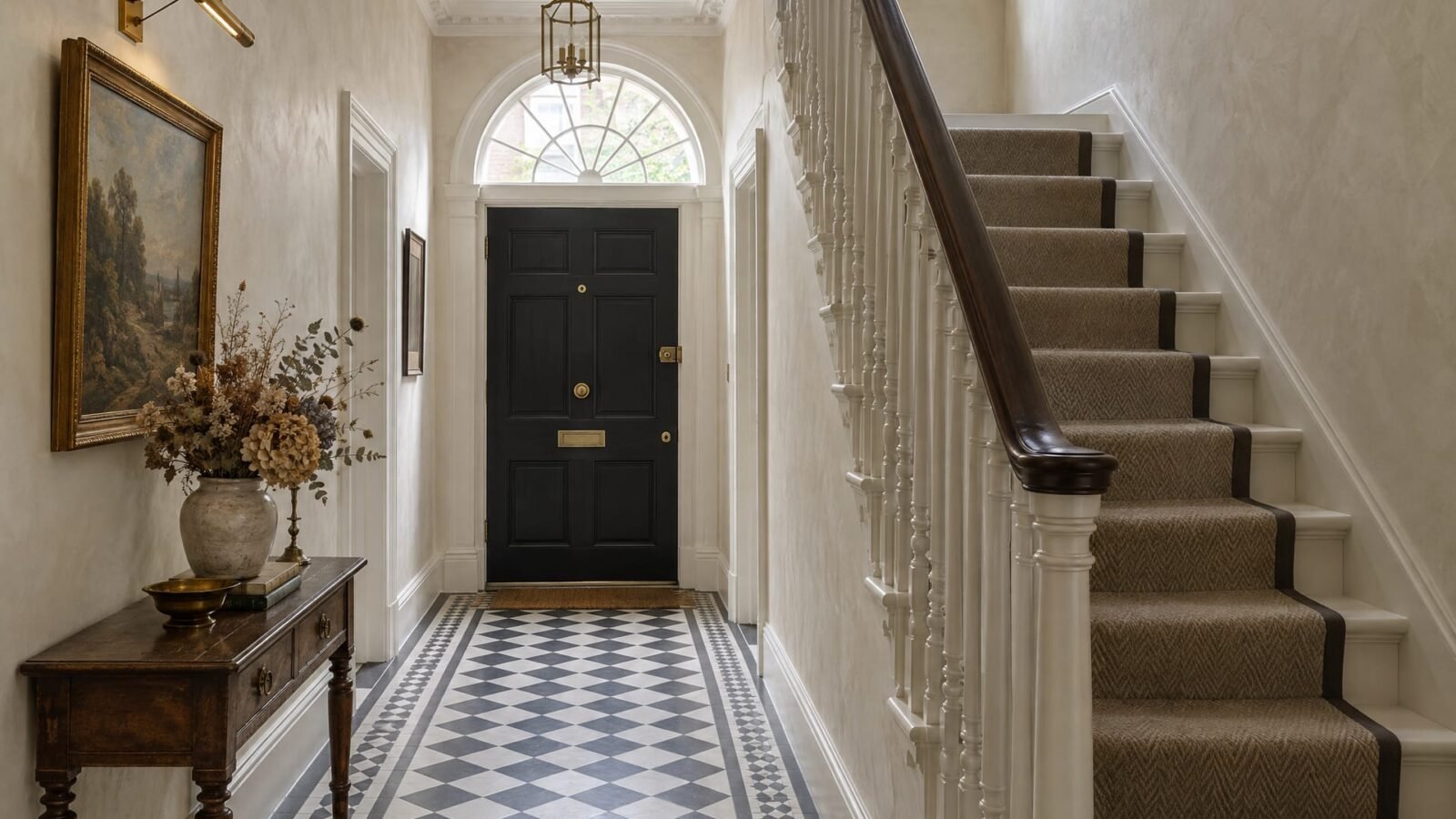
Marmorino is the quieter sibling of high-gloss Venetian plaster. Made from lime putty and crushed marble, it is trowelled and compressed by hand to create a soft, natural surface somewhere between honed limestone and fine suede — elegant without shouting about it.
It is the finish we recommend most often for London hallways, stairwells, drawing rooms and bedrooms, especially in Victorian, Edwardian and Georgian houses where a breathable, mineral finish suits the building as much as the interior.
The look and feel of Marmorino
Where stucco veneziano is polished to a mirror shine, Marmorino keeps a little of the marble’s texture. Depending on how it is finished, you can have:
- Matt Marmorino — chalky, soft and velvety, with gentle tonal movement.
- Satin Marmorino — lightly burnished to a low sheen that catches raking light.
- Polished Marmorino — compressed harder for a subtle lustre while keeping a stone-like character.
- Fine sand finishes — a slightly grainier texture for a more rustic, natural look; see our textured finishes.
Not sure whether you’re a Marmorino or a stucco person? Read Marmorino vs stucco veneziano, then ask us to bring both as sample boards.
Why Marmorino suits London homes
- Breathable — it lets solid brick walls release moisture, helping to avoid the trapped damp and flaking paint common in older London houses.
- Forgiving — the matt surface doesn’t highlight minor undulations the way gloss can, which is ideal on older, less-than-perfect walls.
- Durable — the lime cures harder over time, and scuffs in busy hallways can be touched up locally.
- Timeless — it works with period cornicing and modern joinery alike.
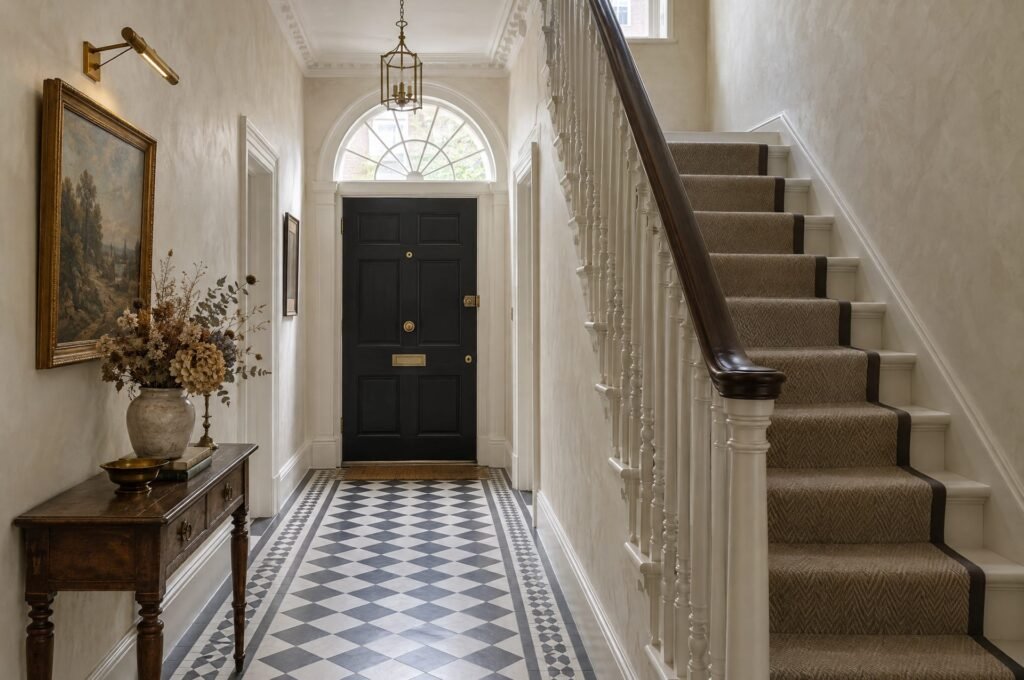
How we apply Marmorino
We start with a careful survey and sample boards. After protecting the space and preparing the walls — filling, skimming where needed and priming — we apply two or three thin coats of Marmorino, compressing each one with a steel trowel. The final coat is burnished to your chosen sheen and protected with a breathable wax or sealer.
A typical hallway, stairs and landing takes around a week from first protection to final clean-up. Our guide to care and lifespan covers what happens after we leave.
Marmorino colours
Marmorino looks its best in natural, mineral colours: warm whites, bone, stone, putty, clay, soft greens and ochres. Because the finish is matt, colours read slightly lighter and softer than they would in gloss. For inspiration, see our favourite plaster colours for 2026.
Marmorino prices
Marmorino is often slightly less expensive than high-gloss Venetian plaster because it needs fewer coats and less burnishing, though stairwells and high ceilings add access costs. We quote a fixed price after a free survey — read our cost guide for typical ranges.